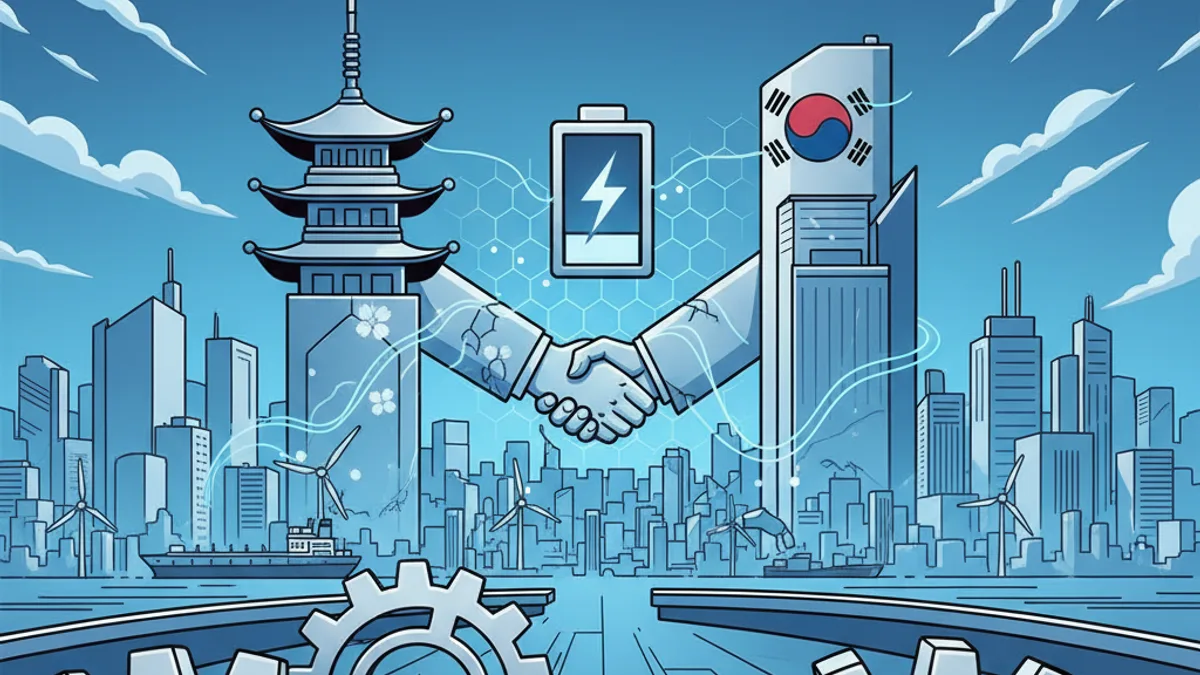
Japan-South Korea Summit Strengthens Energy Security Partnership
Japan and South Korea agreed to establish energy cooperation framework including stockpile enhancement and crisis response mechanisms, aiming to strengthen supply resilience and stabilize energy markets.
Key Points
- • Japan-South Korea policy dialogue launched to coordinate energy security cooperation measures.
- • Emergency petroleum product exchange system planned between Japan and South Korea.
- • Indo-Pacific stockpile enhancement aims to stabilize energy supplies and prices.
Japanese Prime Minister Takaichi and South Korean President Lee Jae-myung agreed on May 19, 2026, to establish a comprehensive energy cooperation framework aimed at strengthening supply resilience across the Indo-Pacific region, according to NHK reports.
The summit, held in South Korea, marked a significant step forward in bilateral relations between the two nations, with energy security emerging as a critical area of collaboration. Both leaders committed to launching a formal "policy dialogue" mechanism to develop concrete action plans for energy cooperation, focusing on two main pillars: strengthening energy supply resilience in the Indo-Pacific region through enhanced stockpiling, and reinforcing both nations' energy security frameworks.
For foreign residents in Japan, this agreement carries practical implications for energy stability and potentially energy costs in the coming years. Japan's heavy reliance on imported energy—particularly liquefied natural gas, oil, and coal—makes the country vulnerable to supply disruptions and price volatility. The new cooperation framework with South Korea aims to mitigate these risks through coordinated stockpiling and emergency response mechanisms.
According to NHK's business coverage, one of the key elements of the agreement involves mutual support during energy crises, including the potential exchange of petroleum products when either country faces supply shortages. This type of arrangement could help stabilize energy markets in Japan during emergencies, potentially preventing the kind of price spikes that affect household electricity bills and transportation costs.
The timing of this summit reflects growing concerns about energy security in East Asia. Both Japan and South Korea are heavily dependent on energy imports and face similar challenges in securing stable, affordable supplies. The Indo-Pacific focus of the cooperation suggests both nations are working to diversify supply routes and build redundancy into their energy systems, reducing dependence on any single source or shipping route.
Prime Minister Takaichi arrived in South Korea on the morning of May 19th specifically for these discussions, underscoring the priority her government places on energy cooperation. The establishment of a dedicated policy dialogue framework indicates that this will be an ongoing, structured collaboration rather than a one-time agreement.
For expats living in Japan, the practical benefits of this cooperation may not be immediately visible but could prove significant over time. Enhanced energy stockpiles and coordinated crisis response mechanisms should contribute to more stable energy prices and reduced risk of supply disruptions. This is particularly relevant for those managing household budgets, as energy costs represent a significant portion of monthly expenses for most residents.
The agreement also reflects Japan's broader strategy of strengthening regional partnerships to address shared challenges. Energy security has become increasingly important as global supply chains face various pressures, from geopolitical tensions to climate-related disruptions. By working closely with South Korea, Japan is building resilience into systems that affect daily life for all residents, including the foreign community.
While specific implementation details will be developed through the new policy dialogue mechanism, the commitment from both leaders signals a serious, long-term approach to energy cooperation. Expats should monitor developments in this partnership, as concrete measures emerging from the policy dialogue could affect everything from electricity rates to fuel prices.
The summit represents a positive development in Japan-South Korea relations, which have experienced periods of tension in recent years. Energy cooperation offers a practical area where both nations have clear mutual interests, potentially creating momentum for broader collaboration. For foreign residents, stronger regional partnerships generally contribute to a more stable living environment and better economic conditions in Japan.