Japan to Purchase 210,000 Tons of Reserve Rice Amid Record Oversupply
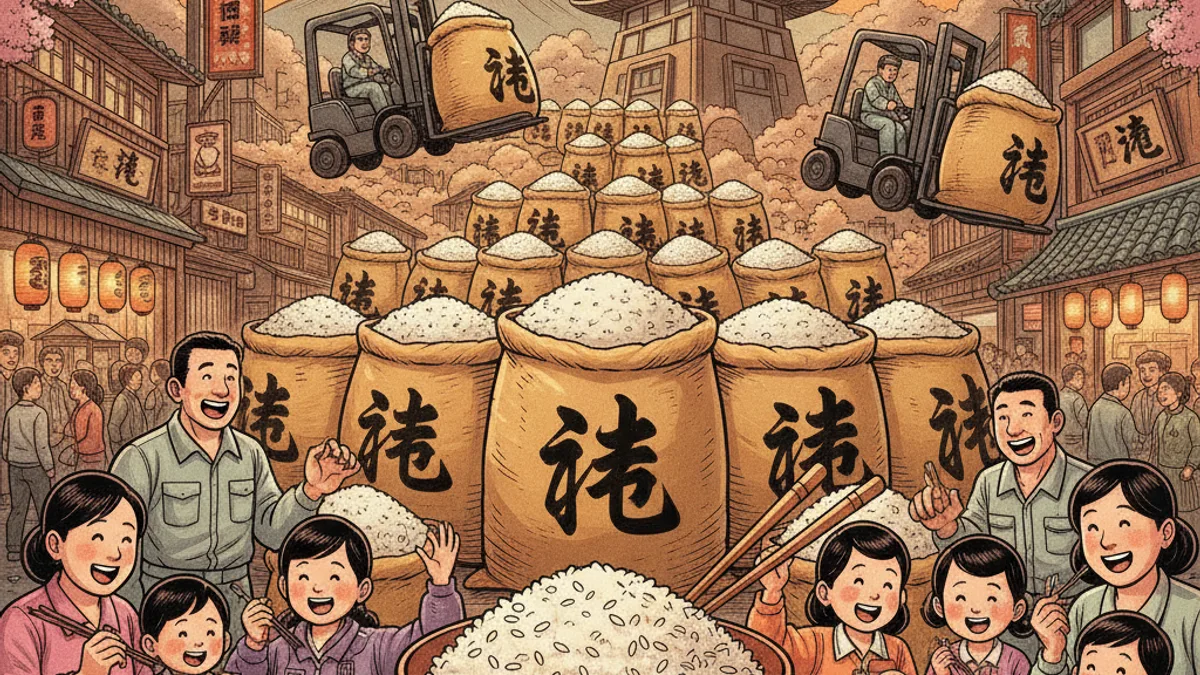
Japan will purchase 210,000 tons of reserve rice starting September 18 to address record oversupply. The move has drawn criticism as wasteful spending, though consumers may benefit from continued low prices.
Key Points
- • Government begins 210,000-ton rice buyback procedures on September 18, 2026.
- • Rice prices expected to continue gradual decline despite government intervention.
- • Japan faces largest rice surplus in recent history affecting market prices.
- • Critics call reserve rice purchase wasteful use of taxpayer money.
The Japanese government has officially decided to purchase 210,000 tons of reserve rice in response to what experts are calling the largest rice surplus in recent history, according to announcements made by the Ministry of Agriculture, Forestry and Fisheries (MAFF) on September 2, 2026.
According to NHK, MAFF held a council meeting on September 2 to formally approve the purchase of 21 万 tons (210,000 metric tons) of reserve rice. The ministry will begin procedures with collection operators on September 18, 2026, to execute the buyback program. This decision comes as Japan faces unprecedented rice inventory levels that have put downward pressure on market prices.
The announcement by Agriculture Minister Kazukazu Suzuki has sparked mixed reactions among taxpayers and industry observers. According to Livedoor News, critics have labeled the initiative as "a waste of tax money," questioning whether government intervention is the appropriate response to market oversupply. The debate highlights ongoing tensions between supporting domestic rice producers and managing public expenditure efficiently.
The current rice surplus represents the largest stockpile situation in recent memory, with inventory levels exceeding normal market expectations. This oversupply has created challenges for rice farmers who have seen wholesale prices soften as supply outpaces demand. The government's reserve rice purchase program is designed to remove excess inventory from the market, theoretically stabilizing prices and providing financial relief to producers.
For foreign residents in Japan, the most immediate impact will likely be seen at supermarkets and retail outlets. According to market analysts cited by Livedoor News, rice prices are expected to continue declining gradually in the coming months despite the government intervention. This means consumers, including expats, may benefit from lower prices when purchasing rice for household consumption.
The reserve rice system in Japan functions as a strategic food security measure, with the government maintaining stockpiles to ensure stable supply during emergencies or natural disasters. Under normal circumstances, the government rotates these reserves by selling older stock and purchasing new rice. However, the current 210,000-ton purchase represents an extraordinary measure aimed at market stabilization rather than routine stock rotation.
The timing of the buyback program is significant, as it comes ahead of the autumn harvest season when new rice typically enters the market. By removing existing inventory before the new crop arrives, authorities hope to prevent further price deterioration that could financially strain farming communities already dealing with challenging market conditions.
Critics of the program argue that government market intervention distorts natural price mechanisms and uses taxpayer funds to support an industry that may need structural reforms rather than temporary relief. Supporters counter that maintaining the viability of domestic rice production is essential for national food security and preserving rural communities.
For expats living in Japan, this policy development offers insight into how the Japanese government balances agricultural policy, food security concerns, and market economics. While the debate over fiscal responsibility continues, the practical effect for foreign residents will primarily manifest in grocery shopping, where rice prices may remain lower than in previous years.
The September 18 start date for the buyback procedures marks the beginning of a process that will unfold over the coming weeks and months. Consumers should monitor retail prices to take advantage of the current market conditions, while those interested in Japanese agricultural policy can follow how this intervention affects long-term market dynamics and whether it successfully achieves its stated objectives of price stabilization and producer support.
Sources
This article was written by AI from these Japanese-language reports. Check them before acting on anything here.
- [1] Livedoor News — original report (Japanese)
- [2] Livedoor News — original report (Japanese)
- [3] NHK — original report (Japanese)
AI-written summary of Japanese reports; not human-reviewed; check the linked sources. How we write articles