Japanese Automakers Slash U.S. EV Plans as Demand Weakens
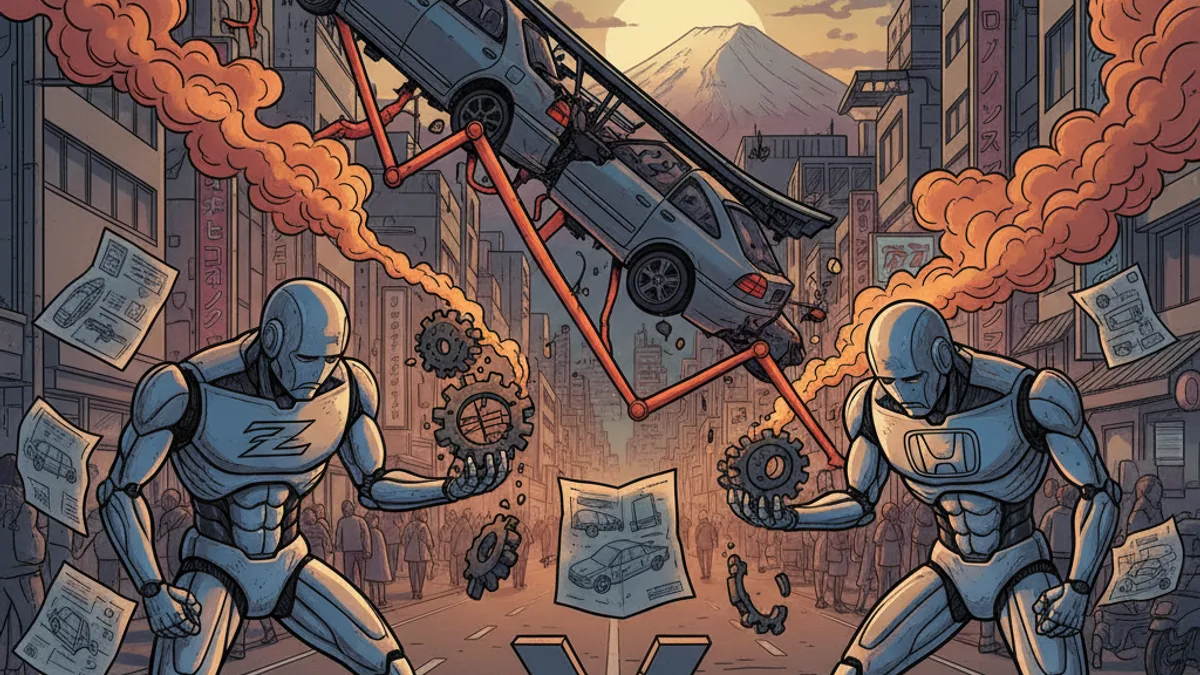
Nissan and Honda are canceling multiple U.S. EV production plans due to falling demand. Honda projects a 400 billion yen operating loss, reflecting broader challenges in the automotive industry's electric transition.
Key Points
- • Nissan cancels two EV models planned for Mississippi production facility.
- • Honda halts three U.S. EV models, faces 400 billion yen loss.
- • Declining U.S. EV demand forces Japanese automakers to reassess strategies.
- • Industry shifts may affect employment in Japan's automotive sector.
Major Japanese automakers are dramatically scaling back their electric vehicle production plans in the United States, marking a significant shift in strategy as demand for EVs falls short of earlier projections. The reversals affect both Nissan and Honda, two of Japan's largest automotive manufacturers, and signal broader challenges facing the global EV transition.
According to NHK, Nissan Motor Co. has decided to cancel production of two EV models that were planned for its Mississippi manufacturing facility. The decision represents a major departure from the company's previously announced electrification strategy for the North American market. Meanwhile, Honda has halted development and sales plans for three EV models that were slated for U.S. production, demonstrating the widespread nature of these strategic pullbacks across the Japanese automotive industry.
The primary driver behind these cancellations is declining demand for electric vehicles in the American market. While EVs experienced rapid growth in recent years, that momentum has slowed considerably as consumers grapple with concerns about charging infrastructure, vehicle prices, and range anxiety. The cooling demand has forced automakers to reassess their ambitious electrification timelines and investment commitments.
For expats living in Japan, these developments carry several important implications. First, they reflect the challenging reality facing the automotive industry's transition to electric vehicles, which may affect employment and investment decisions at Japanese manufacturers. The automotive sector remains a crucial component of Japan's economy, and strategic shifts of this magnitude can have ripple effects throughout the supply chain and related industries.
The financial impact of these decisions is substantial. According to Yahoo Japan Business, Honda is projecting an operating loss of approximately 400 billion yen (roughly $2.6 billion USD) for the fiscal year ending March 2026. This significant red ink underscores the costs associated with pivoting away from planned EV investments and the broader challenges facing automakers as they navigate the uncertain transition to electric mobility.
These cancellations also highlight the divergence between different global markets. While the United States is experiencing softening EV demand, other regions, including parts of Europe and China, continue to see stronger adoption rates. Japan itself has been slower to embrace EVs compared to hybrid vehicles, which remain extremely popular domestically. This geographic variation in consumer preferences is forcing automakers to adopt more regionally tailored strategies rather than pursuing uniform global electrification plans.
For expats working in Japan's automotive industry or related sectors, these announcements may signal potential changes in corporate priorities and resource allocation. Companies may redirect investment toward hybrid technology, where Japanese manufacturers have traditionally excelled, or focus EV development on markets showing stronger demand. Those involved in supply chain management, manufacturing, or automotive technology should monitor how these strategic shifts affect their organizations.
The pullback also raises questions about the pace of the broader EV transition. While environmental concerns and regulatory pressures continue pushing toward electrification, the recent demand slowdown suggests the timeline may be longer and more complex than initially anticipated. Governments and manufacturers alike are reassessing their targets and investment schedules.
Looking ahead, Japanese automakers face the challenge of balancing their long-term electrification commitments with near-term market realities. While these production cancellations represent setbacks, they don't necessarily signal an abandonment of EV technology. Rather, they reflect a recalibration of strategies to align with actual consumer demand rather than optimistic projections. For expats in Japan, staying informed about these industry shifts will be important for understanding the evolving landscape of one of the country's most vital economic sectors.