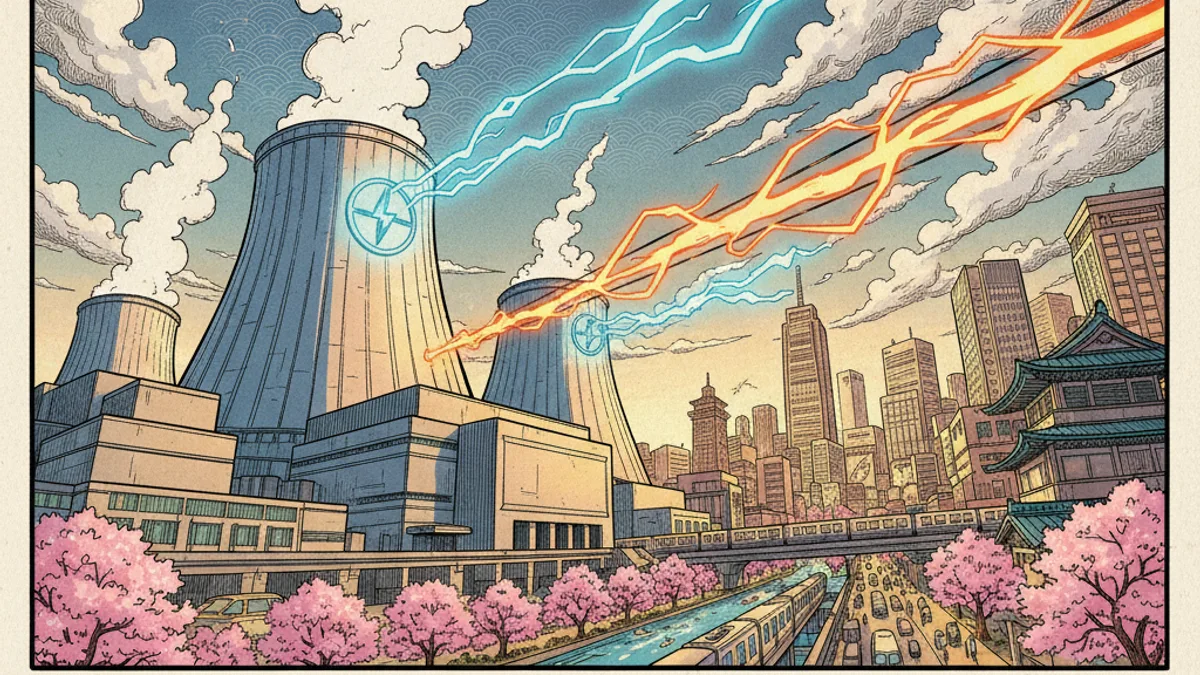
Kashiwazaki-Kariwa Nuclear Plant Resumes Operations, Powering Tokyo Region
TEPCO's Kashiwazaki-Kariwa Nuclear Plant Unit 6 began commercial operations on April 16, 2026, supplying electricity to Tokyo for the first time since the 2011 Fukushima disaster, with stable operation over the next year identified as critical.
Key Points
- • Kashiwazaki-Kariwa Unit 6 began commercial operations April 16, supplying Tokyo region electricity.
- • First nuclear power from facility to Tokyo area since 2011 Fukushima disaster.
- • Plant scheduled to operate one year until next inspection; stability crucial.
- • May contribute to energy stability and potentially affect electricity pricing long-term.
Tokyo Electric Power Company (TEPCO) began commercial operations at the Kashiwazaki-Kariwa Nuclear Power Plant's Unit 6 on April 16, 2026, marking a significant milestone in Japan's energy policy and the first time the facility has supplied electricity to the Tokyo metropolitan area since the 2011 Fukushima disaster.
According to NHK, the reactor, which was restarted in January 2026, transitioned to full commercial operations in the afternoon of April 16. The plant is scheduled to operate continuously for approximately one year until its next scheduled inspection, with maintaining stable operations identified as a key challenge for TEPCO.
This restart represents a major development for foreign residents living in the Tokyo region and surrounding areas. The Kashiwazaki-Kariwa facility, located in Niigata Prefecture on Japan's western coast, is now contributing to the electricity grid that powers the capital and its surrounding prefectures, where a significant portion of Japan's foreign resident population lives and works.
The resumption of operations at Japan's largest nuclear power station comes more than 15 years after the Fukushima Daiichi nuclear disaster forced a nationwide reassessment of nuclear safety standards. TEPCO, the same company that operated the Fukushima plant, has faced intense scrutiny and numerous regulatory hurdles in bringing Kashiwazaki-Kariwa back online.
For expats and foreign businesses operating in Japan, this development has several practical implications. The addition of nuclear-generated electricity to the grid may contribute to greater energy stability in the Tokyo metropolitan area, potentially reducing the risk of power shortages during peak demand periods such as summer heat waves or winter cold snaps. Since 2011, Japan has relied heavily on imported fossil fuels to meet energy demands, contributing to higher electricity costs that have affected both residential and commercial users.
The plant's return to commercial operations also reflects Japan's broader energy policy direction. Despite public concerns about nuclear safety that persist since Fukushima, the Japanese government has maintained that nuclear power remains essential to meeting the country's energy needs and climate goals. For foreign residents, understanding this policy context is important, particularly for those making long-term decisions about living and working in Japan.
TEPCO's challenge now lies in demonstrating it can maintain safe, stable operations over the coming year. According to NHK's reporting, the company plans to run Unit 6 continuously until the next scheduled inspection, making operational stability a primary concern. Any safety incidents or operational problems could result in renewed shutdowns and reignite public debate about nuclear power's role in Japan's energy mix.
The Kashiwazaki-Kariwa plant has faced significant obstacles in recent years, including security breaches that led to regulatory sanctions. The Nuclear Regulation Authority had previously issued corrective action orders due to inadequate security measures, including incidents where unauthorized staff accessed restricted areas. TEPCO has had to demonstrate substantial improvements in safety protocols and security systems to gain approval for restart.
For foreign residents, particularly those living in Niigata Prefecture or the broader Kanto region, staying informed about the plant's operations through official channels and local news sources is advisable. While modern nuclear facilities operate under strict safety regulations, understanding emergency procedures and evacuation routes remains prudent, as it would be in any location near critical infrastructure.
The restart also has potential economic implications. Reduced reliance on imported fossil fuels could eventually contribute to more stable electricity pricing, though any impact on consumer bills will likely take time to materialize and depend on various market factors.
As Japan continues balancing energy security, environmental commitments, and public safety concerns, the successful operation of Kashiwazaki-Kariwa Unit 6 will serve as an important test case for the country's nuclear energy future and its implications for the millions of residents, both Japanese and foreign, who depend on stable electricity supplies in the world's third-largest economy.