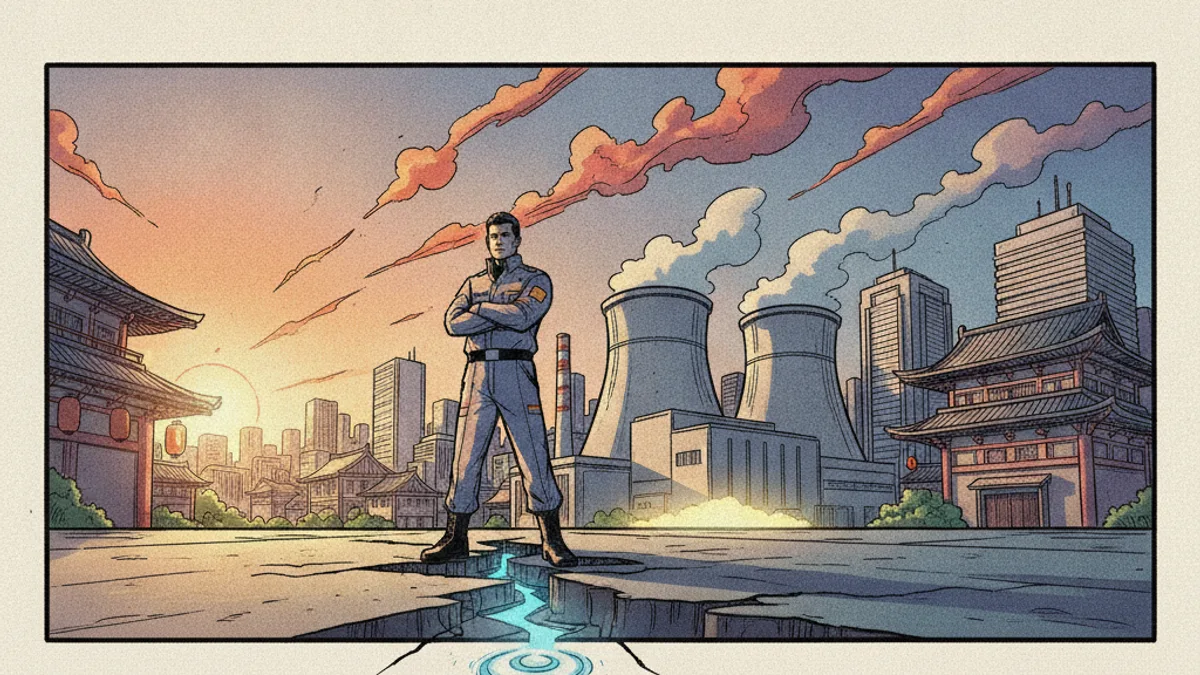
Magnitude 5 Quake Hits Iwate and Aomori, Nuclear Facilities Safe
A magnitude 5 earthquake struck Iwate and Aomori on June 28, following a magnitude 7.2 quake three days earlier. All nuclear facilities reported no damage, with no tsunami warning issued.
AI-written summary of Japanese reports; not human-reviewed; check the linked sources. How we write articles
Key Points
- • Magnitude 5 aftershock hit Iwate and Aomori June 28 at 5:21 AM.
- • All nuclear facilities including Onagawa and Higashidori reported no damage or abnormalities.
- • No tsunami warning issued; radiation monitoring showed no changes in levels.
- • Aftershocks may continue following June 25 magnitude 7.2 main earthquake event.
A magnitude 5 earthquake struck off the coast of Iwate Prefecture on the morning of June 28, 2026, at approximately 5:21 AM, registering lower 5 on Japan's seismic intensity scale in both Iwate and Aomori prefectures. According to NHK, no tsunami warning was issued following the tremor, providing relief to coastal communities still mindful of the region's seismic history.
This latest earthquake follows a significantly stronger magnitude 7.2 quake that struck the same region off Iwate's coast on June 25, just three days earlier. The Japan Meteorological Agency has been monitoring the area closely, and this recent event appears to be an aftershock of the larger seismic event. For foreign residents in northeastern Japan, understanding the relationship between main shocks and aftershocks is crucial for maintaining appropriate vigilance during seismically active periods.
Nuclear Safety Confirmations
In the immediate aftermath of the earthquake, authorities moved quickly to assess the status of nuclear facilities throughout the affected region. According to reports from NHK, all major nuclear installations reported no abnormalities or damage.
The Onagawa Nuclear Power Plant, located in Miyagi Prefecture's Ishinomaki City and Onagawa Town and operated by Tohoku Electric Power Company, confirmed no earthquake-related irregularities. Critically, radiation monitoring posts surrounding the facility detected no changes in radiation levels, indicating the plant's containment systems remained intact.
Similarly, the Higashidori Nuclear Power Plant in Aomori Prefecture's Higashidori Village, which has been offline for an extended period, reported no damage or anomalies. Tohoku Electric Power Company confirmed that radiation monitoring systems around this facility also showed no variation in readings.
The Rokkasho Reprocessing Plant, a spent nuclear fuel reprocessing facility currently under construction in Aomori Prefecture's Rokkasho Village, was also inspected following the tremor. Japan Nuclear Fuel Limited reported no earthquake-related problems at the site, with monitoring posts in the surrounding area showing stable radiation levels.
What Expats Should Know
For foreign residents living in Japan, particularly in seismically active regions like Tohoku, this incident serves as an important reminder of earthquake preparedness fundamentals. The lower 5 intensity level experienced in this earthquake represents strong shaking that can cause unsecured objects to fall and may be frightening, especially for those unaccustomed to earthquakes.
The quick succession of a magnitude 7.2 earthquake followed by this magnitude 5 aftershock illustrates a common pattern in Japanese seismology. Major earthquakes are frequently followed by aftershocks that can continue for days, weeks, or even months. While aftershocks are typically smaller than the main event, they can still cause damage, particularly to structures already weakened by the initial quake.
Expats should ensure their earthquake preparedness kits are readily accessible and well-stocked with essentials including water, non-perishable food, flashlights, batteries, first aid supplies, and important documents. Familiarize yourself with evacuation routes from your home and workplace, and ensure you know how to receive emergency alerts on your mobile device through Japan's emergency broadcasting system.
The absence of tsunami warnings in this case should not create complacency. Coastal residents must remain aware that earthquakes occurring offshore can generate tsunamis, and immediate evacuation to higher ground is essential when tsunami warnings are issued, regardless of whether strong shaking was felt.
Staying Informed
Foreign residents should monitor NHK World for English-language updates on seismic activity and ensure their smartphones are configured to receive emergency alerts. The Japan Meteorological Agency provides real-time earthquake information, and understanding basic Japanese earthquake terminology can be lifesaving in emergency situations.
While this earthquake caused no reported damage to nuclear facilities or triggered tsunami warnings, it underscores the importance of maintaining constant readiness in one of the world's most seismically active nations.
Sources
This article was written by AI from these Japanese-language reports. Check them before acting on anything here.
- [1] NHK — original report (Japanese)
- [2] NHK — original report (Japanese)
- [3] NHK — original report (Japanese)
- [4] NHK — original report (Japanese)
- [5] Yahoo! Japan News — original report (Japanese)
- [6] Livedoor News — original report (Japanese)