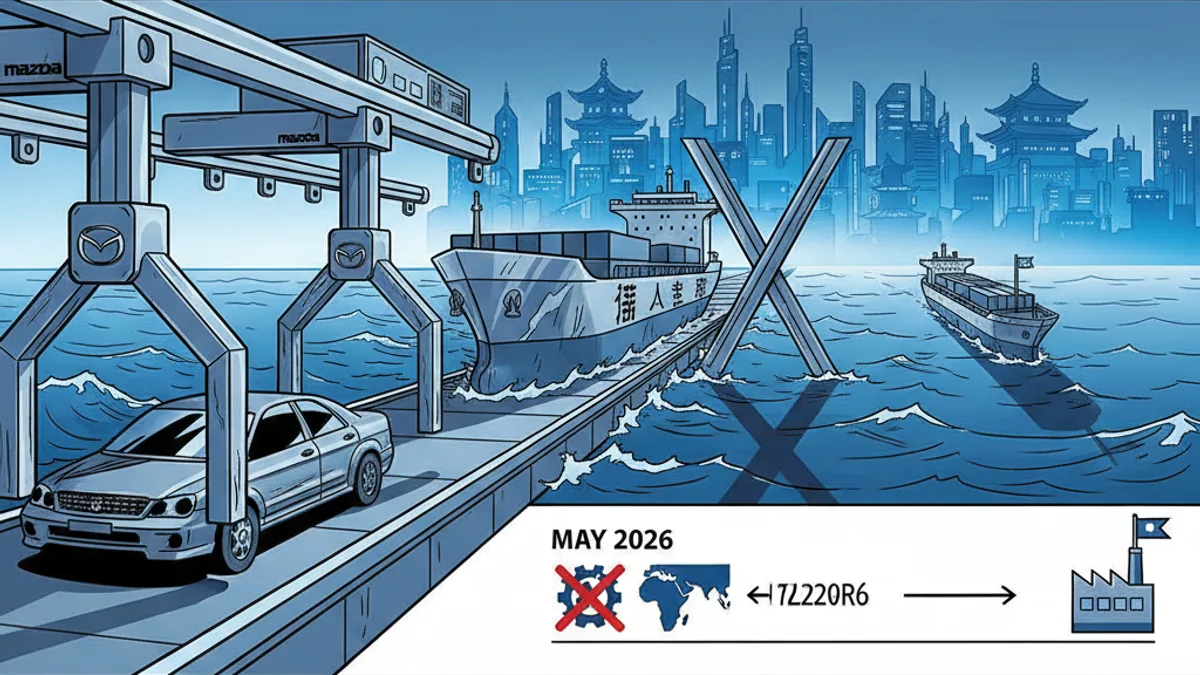
Mazda Halts Middle East Production as Hormuz Strait Crisis Continues
Mazda suspended Middle East vehicle production until May 2026 due to Hormuz Strait blockade, while shifting output to European markets. Three Japan-related ships have passed through the strait without Japanese crew.
Key Points
- • Mazda halted Middle East production through May 2026 amid Hormuz blockade.
- • Production shifted to Europe; overall manufacturing volumes remain unchanged.
- • Three Japan-related vessels passed Hormuz Strait without Japanese crew members.
- • Automotive and logistics workers may face production schedule adjustments.
Mazda Motor Corporation has suspended production of vehicles destined for Middle Eastern markets until May 2026, as the effective blockade of the Strait of Hormuz continues to disrupt global shipping routes, according to reports from NHK and Yahoo Japan Business published April 6, 2026.
The Hiroshima-based automaker's decision comes amid escalating tensions in the Persian Gulf region, where the Strait of Hormuz—a critical waterway through which approximately one-fifth of global oil supplies typically pass—remains effectively blocked. This strategic chokepoint connects the Persian Gulf to the Gulf of Oman and the Arabian Sea, making it essential for maritime trade between the Middle East and the rest of the world.
According to NHK, Mazda has completely halted production of vehicles intended for export to Middle Eastern countries. However, the company is simultaneously increasing production of vehicles bound for European and other markets to compensate. Mazda officials indicated that overall production volumes are expected to remain stable, with no anticipated impact on total manufacturing output.
The production suspension reflects the practical impossibility of delivering vehicles to Middle Eastern customers while the strait remains blocked. Rather than accumulating inventory that cannot be shipped, Mazda has opted to reallocate its manufacturing capacity to markets that remain accessible through alternative shipping routes.
Meanwhile, a limited number of Japan-related vessels have successfully navigated through the Strait of Hormuz despite the ongoing crisis. NHK reported that a third Japan-related ship has passed through the strait and exited the Persian Gulf. Importantly, none of the three vessels that have made the passage carried Japanese crew members, according to the reports.
The successful passage of these ships suggests that while the strait is effectively blockaded, it is not completely impassable under all circumstances. However, the risks and uncertainties associated with transit through the region remain significant enough that commercial shipping operations have been severely curtailed.
For foreign residents in Japan, particularly those working in automotive manufacturing, logistics, or related industries, these developments signal potential shifts in production schedules and supply chain operations. Mazda employs numerous foreign workers at its facilities in Hiroshima and Yamaguchi prefectures, and production reallocations could affect work schedules or assignments.
The automotive industry represents a significant portion of Japan's manufacturing sector and export economy. Mazda's response to the Hormuz situation may foreshadow similar adjustments by other Japanese automakers, including Toyota, Honda, and Nissan, which also export vehicles to Middle Eastern markets.
Expats working in shipping, maritime insurance, or international trade should note that the crisis continues to create uncertainty around delivery schedules and routing for goods moving between Japan and the Middle East. Companies may need to explore alternative shipping routes around Africa's Cape of Good Hope, which significantly increases transit times and costs.
The situation also highlights Japan's vulnerability to disruptions in critical maritime chokepoints. While the immediate impact on domestic fuel supplies has not been reported as severe, prolonged closure of the Strait of Hormuz could eventually affect energy prices and availability in Japan, which imports the majority of its petroleum needs.
As of April 6, Japanese government officials have not issued specific advisories for foreign residents regarding the Hormuz situation. However, those planning travel to or through the Middle East should monitor updates from their embassies and the Japanese Ministry of Foreign Affairs.
Mazda has not announced specific criteria for resuming Middle East production, suggesting the company will continue monitoring the geopolitical situation closely. The May timeline indicates expectations that the crisis may extend for several more weeks at minimum.
Sources
This article was written by AI from these Japanese-language reports. Check them before acting on anything here.
- [1] Yahoo! Japan News — original report (Japanese)
- [2] Yahoo! Japan News — original report (Japanese)
- [3] NHK — original report (Japanese)
- [4] NHK — original report (Japanese)
AI-written summary of Japanese reports; not human-reviewed; check the linked sources. How we write articles