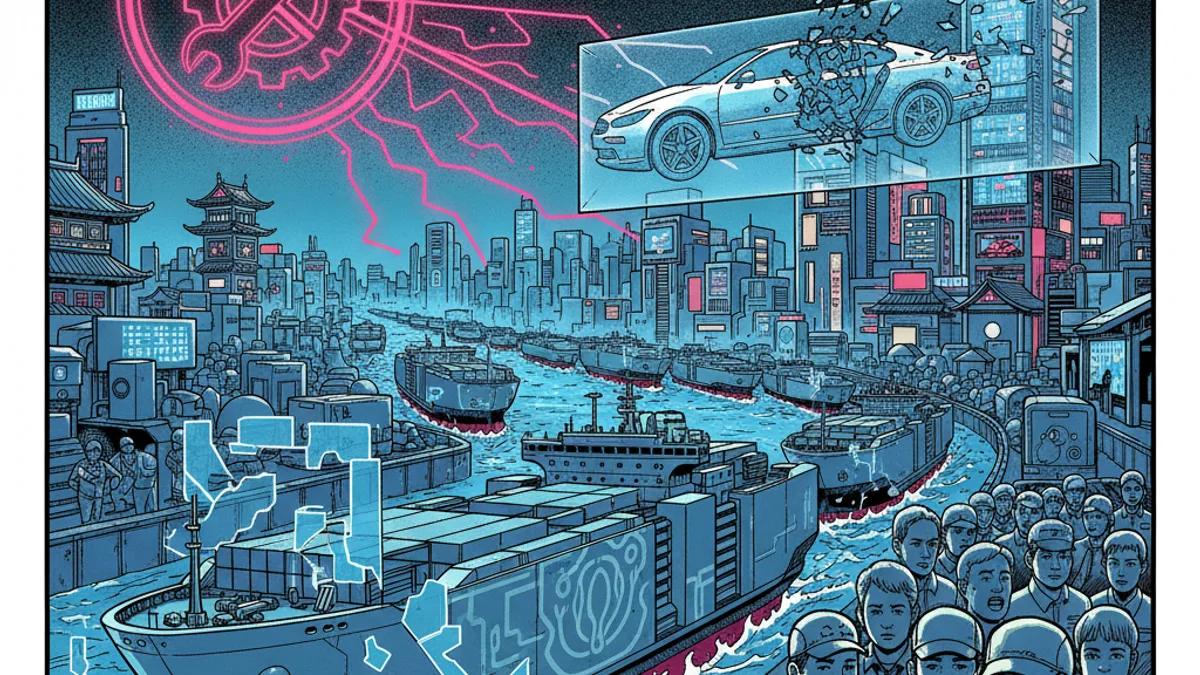
Middle East Crisis Halts Auto Exports, Threatens Japan Supply Chains
Japanese automakers have halted Middle East exports due to Strait of Hormuz blockade. Manufacturers considering production cuts and alternative routes, potentially affecting automotive sector employment.
Key Points
- • Mazda suspended all Gulf nation exports; other automakers evaluating production cuts.
- • Strait of Hormuz blockade prevents Middle East shipments amid Iran tensions.
- • Automotive sector workers may face schedule changes or reduced overtime opportunities.
- • Manufacturers exploring alternative shipping routes and redirecting exports to other markets.
Japan's automotive industry is facing significant disruption as escalating tensions in the Middle East have effectively closed the Strait of Hormuz, halting vehicle shipments to a crucial export market and forcing manufacturers to consider production cuts and alternative strategies.
Mazda announced on March 30, 2026, according to Yahoo Japan Business, that it has suspended all vehicle exports to Gulf nations in the Middle East. This decision reflects the growing crisis affecting Japan's entire automotive sector as shipping routes through the Strait of Hormuz—a critical waterway for global trade—have become impassable due to heightened tensions involving Iran.
According to NHK, the de facto blockade of the Strait of Hormuz resulting from the escalating Iranian situation has prevented automakers from transporting vehicles to the Middle East region. In response, major Japanese car manufacturers are urgently evaluating multiple options, including production cuts at domestic factories, redirecting exports to alternative markets, and exploring different shipping routes to minimize the impact on their operations.
The Middle East represents a significant market for Japanese automakers, particularly the Gulf Cooperation Council (GCC) countries, which have historically been strong consumers of Japanese vehicles. The sudden inability to access this market creates immediate inventory concerns and potential revenue losses for manufacturers who have built production schedules around consistent Middle Eastern demand.
For foreign residents working in Japan's automotive sector or related industries, these developments could have tangible workplace implications. Production cuts at manufacturing facilities may affect shift schedules, overtime opportunities, or contract renewals for those employed in factory operations. Suppliers and logistics companies serving the automotive industry may also face reduced demand for their services during this disruption.
The crisis highlights Japan's vulnerability to geopolitical events affecting global shipping lanes. The Strait of Hormuz, located between Iran and the Arabian Peninsula, is one of the world's most strategic chokepoints, with approximately one-fifth of global oil consumption passing through it. Its closure not only affects vehicle exports but could potentially impact fuel prices and availability in Japan, though no immediate domestic shortages have been reported.
Automakers are exploring several mitigation strategies. Redirecting vehicles intended for Middle Eastern markets to other regions may provide temporary relief, though this depends on demand elasticity in alternative markets and may require modifications to meet different regulatory standards. Exploring alternative shipping routes, such as longer passages around the Arabian Peninsula or through different waterways, would increase transportation costs and delivery times significantly.
The situation remains fluid, with manufacturers monitoring developments closely. Industry observers note that prolonged disruption could force more substantial adjustments, including temporary production slowdowns at Japanese factories to prevent inventory buildup. Such measures would have broader economic implications for communities dependent on automotive manufacturing employment.
For expats working in supply chain management, logistics, or automotive-related fields, staying informed about these developments is essential. Companies may need to rapidly adjust operations, potentially affecting job responsibilities or requiring flexibility in work arrangements. Those in purchasing or procurement roles should anticipate possible shifts in component sourcing strategies if manufacturers adjust production volumes.
The crisis also serves as a reminder of the interconnected nature of global trade and how events in distant regions can directly impact daily life and employment in Japan. While the immediate focus remains on the automotive sector, extended disruption could ripple through related industries, from parts suppliers to shipping companies and port operations.
As the situation develops, Japanese automakers are demonstrating the adaptability that has characterized the industry through previous crises, though the ultimate resolution depends largely on geopolitical factors beyond corporate control. Foreign residents should monitor updates from their employers and industry news sources for information relevant to their specific situations.
Sources
This article was written by AI from these Japanese-language reports. Check them before acting on anything here.
- [1] Yahoo! Japan News — original report (Japanese)
- [2] NHK — original report (Japanese)
AI-written summary of Japanese reports; not human-reviewed; check the linked sources. How we write articles