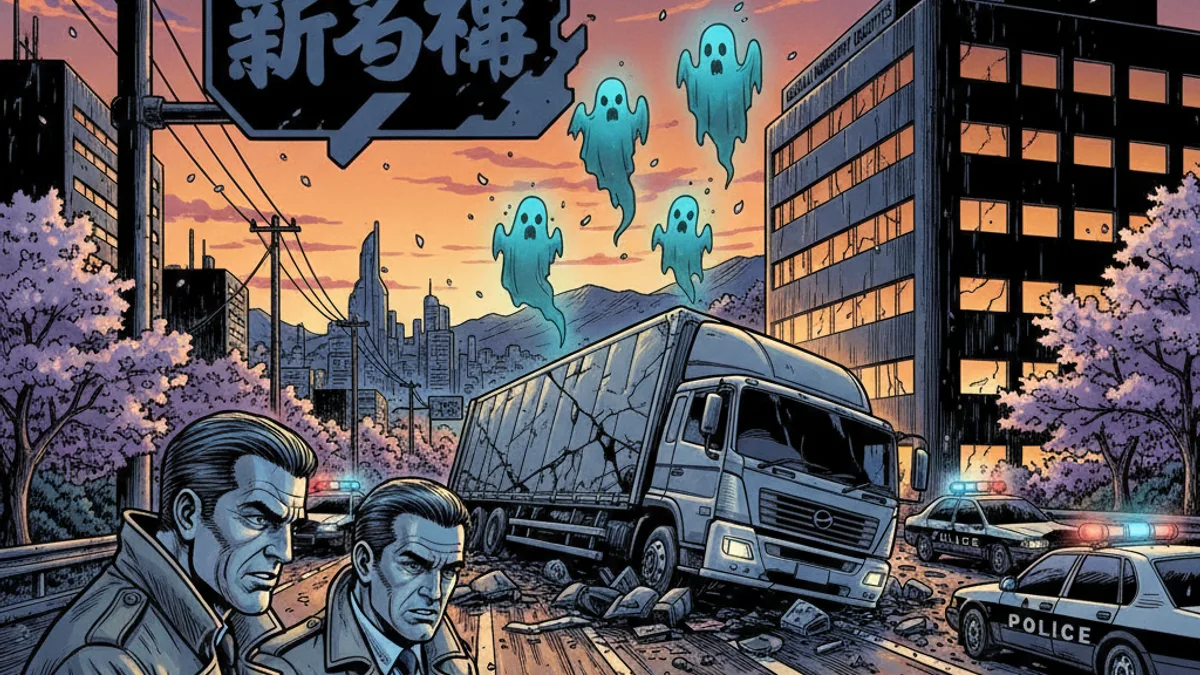
New Meishin Highway Crash Kills 6 as Probe Expands to Company Practices
Six people died when a truck crashed on New Meishin Expressway in Mie. Police are investigating both the driver and her company's safety practices, expanding beyond typical accident probes.
Key Points
- • Truck crash killed six people in Kameyama tunnel on March 20, 2026.
- • Driver had over 20 years accident-free record before the incident occurred.
- • Police searched transportation company premises investigating safety management protocols.
- • Investigation examines corporate accountability beyond individual driver responsibility in Japan.
A devastating highway accident in Mie Prefecture has left six people dead and prompted authorities to investigate not only the driver but also the safety practices of her employer, raising questions about oversight in Japan's trucking industry.
On March 20, 2026, a large commercial truck crashed into three vehicles inside a tunnel on the New Meishin Expressway in Kameyama City, Mie Prefecture. The collision resulted in six fatalities and led to the arrest of the 54-year-old female truck driver, according to NHK. The incident has shocked both the local community and the transportation industry, particularly given the driver's previously unblemished record.
The arrested driver had worked for her transportation company for more than four years and had never been involved in a personal injury accident during her tenure, NHK reported. Family members told media outlets that she had maintained a spotless driving record for over 20 years, making the incident all the more unexpected. Her employer, speaking to Livedoor News, expressed disbelief, stating "I never would have expected this from her," and noted that she was a reliable employee who handled long-distance routes and always kept her vehicle in pristine condition.
What sets this case apart from typical traffic accidents is the expanding scope of the investigation. Police have conducted a search of the transportation company's premises, according to Livedoor News, signaling that authorities are examining whether corporate safety management practices may have contributed to the tragedy. NHK confirmed that investigators are specifically looking into the company's safety management protocols as part of their probe.
For foreign residents in Japan, this incident highlights important aspects of the country's transportation safety system. Japan's trucking industry operates under strict regulations governing driver working hours, vehicle maintenance, and company safety protocols. When accidents occur, authorities don't limit investigations to individual driver error but also scrutinize whether companies properly enforce rest periods, conduct vehicle inspections, and maintain adequate safety training programs.
The investigation into corporate practices suggests police are considering whether factors such as overwork, inadequate vehicle maintenance, or insufficient safety oversight may have played a role. Japan's Labor Standards Act and Road Transport Vehicle Act impose specific requirements on transportation companies, including mandatory rest periods for drivers and regular vehicle safety inspections. Violations can result in business suspension orders or license revocations.
The New Meishin Expressway, which opened in sections between 2008 and 2017, serves as a crucial artery for commercial transportation between western and central Japan. The highway carries significant truck traffic, making safety compliance particularly critical. For expats who regularly use Japan's expressway system, whether for personal or business travel, this incident serves as a reminder of the importance of defensive driving, especially around large commercial vehicles in tunnel sections where escape options are limited.
The case also demonstrates how Japanese authorities approach corporate accountability in transportation accidents. Unlike some jurisdictions where investigations focus solely on driver culpability, Japan's system recognizes that companies bear responsibility for creating and maintaining safe working conditions. This approach reflects broader Japanese legal principles holding corporations accountable for employee actions when systemic failures are identified.
As the investigation continues, authorities will likely examine driver logbooks, vehicle maintenance records, and company safety training documentation. The outcome could have implications for industry-wide safety practices and may prompt regulatory changes affecting how transportation companies operate throughout Japan.
For now, the tragedy serves as a sobering reminder of highway safety risks and the multi-layered responsibility system that governs Japan's commercial transportation sector.