Okinawa Elects Pro-Base Governor, Ending Decades of Opposition
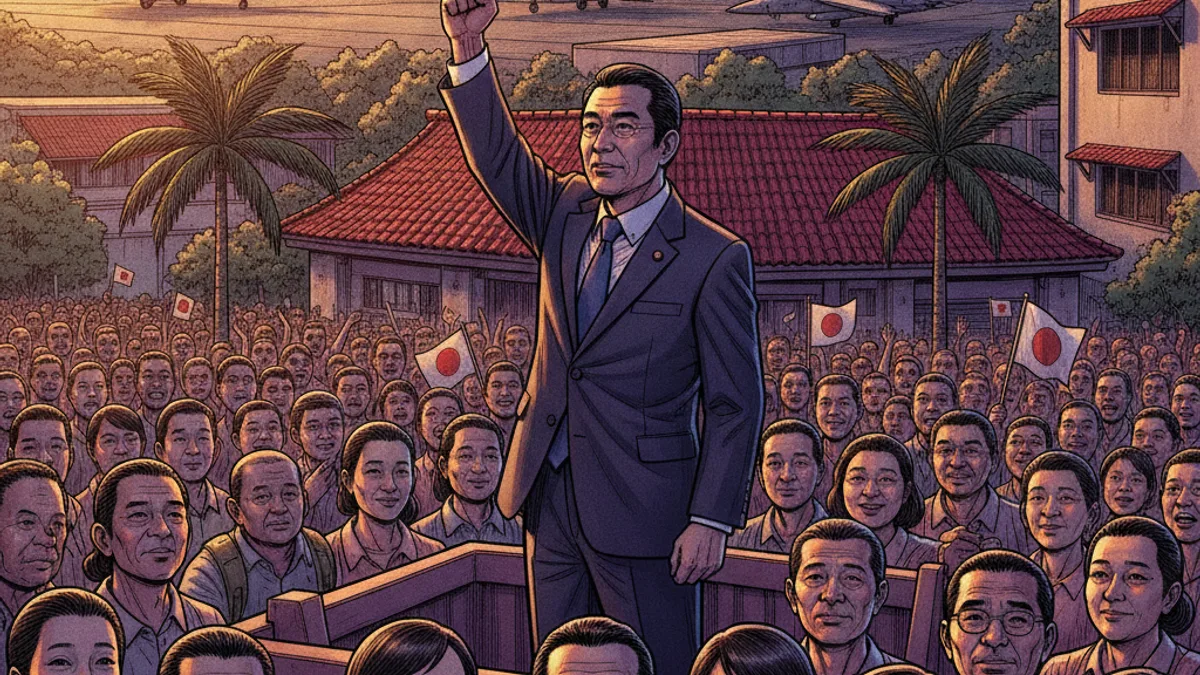
Genta Koza won Okinawa's gubernatorial election on September 13, 2026, defeating incumbent Denny Tamaki and becoming the first pro-base relocation governor in over a decade, ending the "All Okinawa" era.
Key Points
- • Genta Koza won September 13 election, supports Futenma-to-Henoko base relocation plan.
- • "All Okinawa" anti-base coalition defeated after controlling prefecture since 2014.
- • Exit polls show economic revitalization was voters' top priority over base issues.
- • Closer Tokyo-Okinawa cooperation expected, potentially accelerating economic development projects.
In a historic shift for Okinawa Prefecture, Genta Koza secured victory in the gubernatorial election held on September 13, 2026, defeating incumbent Denny Tamaki and marking the end of the "All Okinawa" movement's control over prefectural politics. The election result signals a major policy reversal on the contentious issue of U.S. military base relocation that has defined Okinawan politics for decades.
Koza, a newcomer to prefectural politics, received endorsements from six political parties including the Liberal Democratic Party (LDP), Ishin (Japan Innovation Party), and the Democratic Party for the People. His victory over three-term hopeful Tamaki represents the first time in recent history that a candidate supporting the relocation of U.S. Marine Corps Air Station Futenma to Henoko in Nago City has won the governorship, according to NHK.
The "All Okinawa" coalition, which has opposed base relocation and supported anti-base candidates since 2014, suffered a decisive defeat. This political movement had successfully maintained opposition to the Futenma-to-Henoko transfer plan for over a decade, making Koza's win particularly significant for both local and national politics.
According to exit polling conducted by NHK across 32 voting stations with 2,490 respondents, the election outcome was driven primarily by economic concerns rather than base issues alone. Voters identified "economic revitalization" as their top priority when selecting candidates, suggesting that Okinawa's economic future weighed more heavily than the base relocation debate that has traditionally dominated local elections.
For foreign residents living in Okinawa or considering relocation to the prefecture, this political shift carries several practical implications. The new administration is expected to work cooperatively with Tokyo on base-related matters, potentially reducing the administrative friction that has characterized central-prefectural relations in recent years. This could lead to smoother implementation of economic development projects and infrastructure improvements that had been delayed due to political standoffs.
The national government and ruling coalition have already indicated their intention to proceed steadily with the Henoko relocation plan while simultaneously supporting Okinawa's economic development, according to government statements reported by NHK. This dual approach suggests increased investment in prefectural infrastructure and business development initiatives, which could create new employment opportunities and improve living conditions for all residents, including the expatriate community.
Prime Minister Takaichi's administration is expected to benefit politically from this result, as the Futenma relocation has been a longstanding policy objective of the central government. The alignment between prefectural and national leadership on this issue may accelerate decision-making on various policy matters affecting Okinawa.
The election also reflects broader changes in Okinawan public opinion. While opposition to U.S. military presence remains significant among portions of the population, the prioritization of economic issues suggests residents are increasingly focused on practical concerns such as employment, business development, and quality of life improvements.
For the international community in Okinawa, including U.S. military personnel and their families, the new administration may bring a more cooperative atmosphere regarding base operations and community relations. However, this does not eliminate all opposition to military presence, and foreign residents should remain aware of local sensitivities surrounding base-related issues.
The transition period will be crucial as Koza takes office and begins implementing his policy agenda. Foreign residents should monitor announcements regarding economic development zones, business incentive programs, and infrastructure projects that may affect their communities. The shift toward economic prioritization could mean new opportunities for international businesses and professionals in sectors the prefecture seeks to develop.
This election marks a turning point in Okinawan politics, with implications extending beyond base policy to encompass economic development, central-local government relations, and the prefecture's overall direction for years to come.