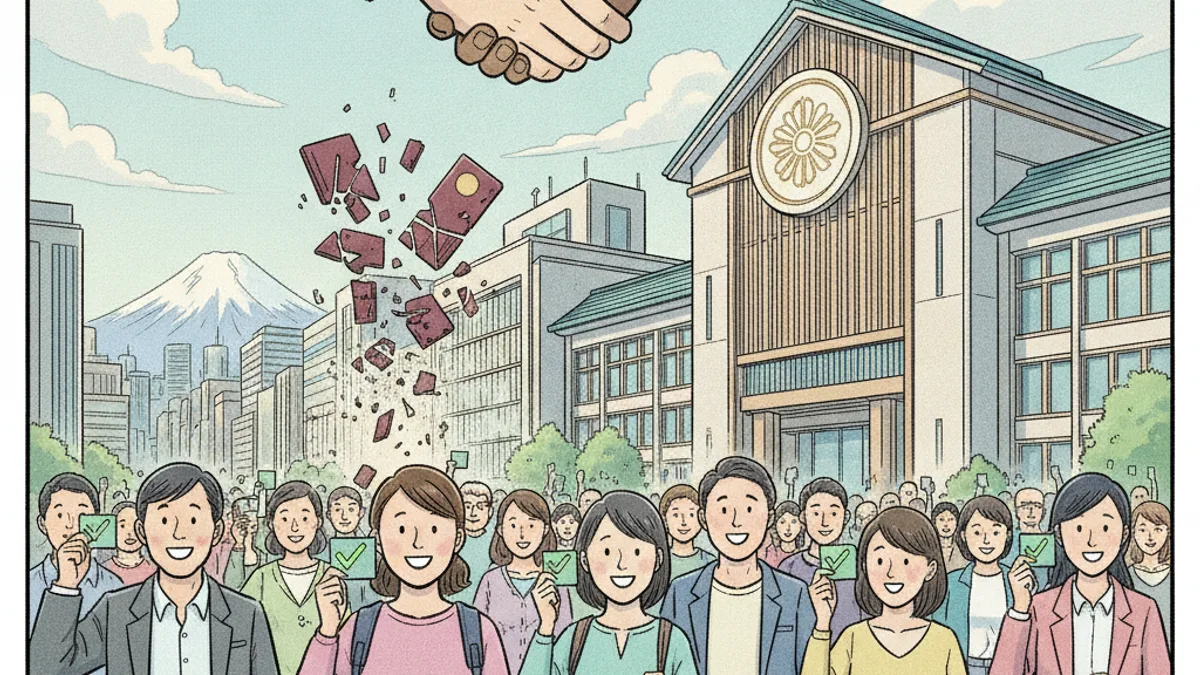
Over 11,000 Lose Health Coverage in Japan Insurance Fraud Crackdown
Japanese authorities revoked health insurance for 11,610 people across 38 companies involved in fraudulent schemes to reduce premiums. Foreign residents must ensure legitimate coverage through proper employment or municipal insurance.
Key Points
- • Over 11,000 people lost insurance coverage through illegal premium reduction schemes.
- • Affected individuals must immediately enroll in legitimate employee or national health insurance.
- • Invalid insurance can cause visa renewal problems for foreign residents in Japan.
- • All Japan residents legally require continuous health insurance coverage without exceptions.
Japanese authorities have stripped social insurance coverage from more than 11,000 people following a nationwide crackdown on illegal schemes designed to reduce premium payments, according to a September 14 announcement by the Ministry of Health, Labour and Welfare (MHLW).
The investigation revealed that 38 companies had been facilitating fraudulent arrangements where individuals were registered as corporate officers without actually performing any work duties. This practice, known colloquially as "kokuho nigare" or "national health insurance escape," allowed participants to access lower-cost employee health insurance premiums instead of paying higher national health insurance rates.
According to NHK, the ministry's guidance led to 11,610 people losing their insured status across these 38 businesses. The scheme specifically targeted Japan's dual health insurance system, where employees typically pay lower premiums through employer-sponsored plans compared to self-employed individuals or those without regular employment who must enroll in municipal national health insurance programs.
Under Japanese law, all residents must maintain health insurance coverage. The employee health insurance system (shakai hoken) generally offers lower premiums because costs are split between employers and employees, with rates calculated based on standard monthly compensation. In contrast, national health insurance premiums are determined by municipal governments and can be significantly higher, particularly for self-employed individuals or those with variable incomes.
The fraudulent scheme exploited this difference by having people register as nominal corporate officers at participating companies. These individuals gained access to employee insurance rates without performing actual work or receiving genuine compensation commensurate with officer status. The companies involved essentially sold access to lower insurance premiums, creating phantom employment relationships.
For foreign residents in Japan, this crackdown carries important implications. All residents, regardless of nationality, are required to maintain health insurance coverage under Japanese law. Those who lose coverage through these fraudulent schemes must immediately enroll in legitimate insurance programs or face penalties and potential gaps in healthcare access.
The MHLW has indicated that affected individuals must now either obtain proper employee health insurance through legitimate employment or enroll in their local municipal national health insurance program. Failure to maintain continuous coverage can result in retroactive premium payments, administrative penalties, and potential immigration complications for foreign residents, as valid health insurance is a requirement for visa renewals.
Experts note that while national health insurance premiums may be higher than employee insurance for some individuals, attempting to circumvent the system through fraudulent arrangements carries serious legal and financial risks. The recent crackdown demonstrates increased scrutiny of insurance enrollment practices, with authorities actively investigating suspicious patterns.
The investigation also highlights the importance of understanding Japan's insurance system properly. Legitimate ways to reduce insurance costs include ensuring accurate income reporting, claiming eligible dependents, and exploring available premium reduction programs for low-income households offered by municipal governments.
Foreign residents who may have unknowingly participated in such schemes should immediately consult with their local pension office (nenkin jimusho) or municipal office to regularize their insurance status. Those currently without coverage should enroll in national health insurance at their ward or city office as soon as possible.
The MHLW has stated it will continue monitoring for similar fraudulent practices and has urged anyone aware of such schemes to report them to authorities. This enforcement action underscores Japan's commitment to maintaining the integrity of its universal healthcare system, which relies on mandatory participation and proper premium payments from all residents.
For expats navigating Japan's complex insurance requirements, the key lesson is clear: there are no legitimate shortcuts. Proper enrollment in either employee health insurance through genuine employment or municipal national health insurance remains the only legal path to coverage.