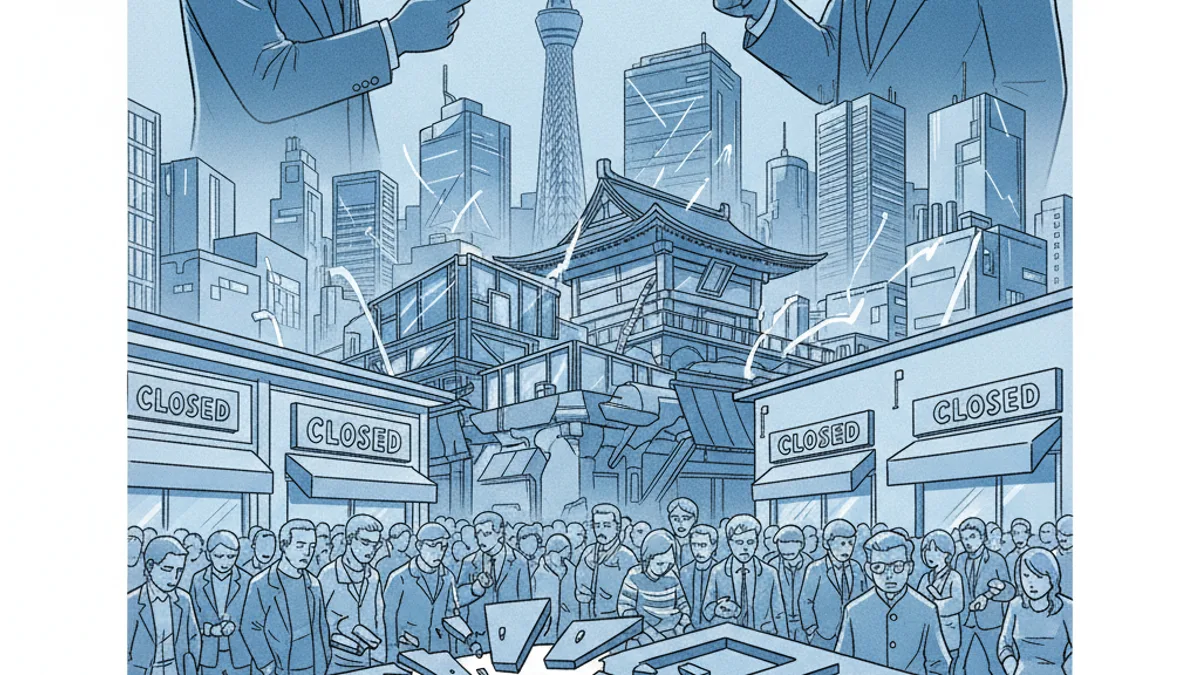
Payment Provider Zentoshin Bankruptcy Disrupts Restaurants Nationwide
Payment processor Zentoshin's bankruptcy is disrupting restaurants nationwide. METI and Financial Services Agency are investigating the company and its lenders, raising concerns about payment system stability.
Key Points
- • Zentoshin payment processor bankruptcy affects restaurants and retailers across Japan.
- • Government agencies investigating company operations and lending financial institutions.
- • Affected merchants may face payment delays and temporary cash-only operations.
- • Foreign business owners should verify payment provider stability and diversify options.
A major payment service provider's sudden collapse is sending shockwaves through Japan's restaurant and retail sectors, with particular implications for foreign business owners and consumers who rely on cashless transactions.
Zentoshin, a credit card payment processing company, has filed for bankruptcy, affecting numerous merchants across Japan who depended on the firm's services to process customer payments. According to NHK, the Ministry of Economy, Trade and Industry (METI) and the Financial Services Agency have launched investigations into the company's operations and the financial institutions that provided loans to Zentoshin.
The bankruptcy has created immediate operational challenges for restaurants and retailers who used Zentoshin's payment gateway services. These merchants now face uncertainty regarding outstanding payments, potential service interruptions, and the urgent need to secure alternative payment processing solutions. For foreign residents who frequent affected establishments or operate businesses in Japan, this disruption highlights vulnerabilities in the payment processing infrastructure that many take for granted.
Payment processing companies serve as crucial intermediaries between merchants and credit card companies, handling transaction authorization and fund transfers. When such a provider fails, merchants may experience delays in receiving payments for transactions already processed, creating cash flow problems that can be particularly severe for small businesses operating on thin margins. The restaurant industry, which Zentoshin primarily served, typically operates with limited financial buffers, making this disruption especially problematic.
The government's decision to investigate reflects concerns about systemic risks in Japan's payment processing sector. METI and the Financial Services Agency are examining not only Zentoshin's business practices but also the lending decisions of financial institutions that supported the company. This scrutiny suggests regulators want to understand whether similar vulnerabilities exist at other payment processors and whether additional merchant businesses could face disruption.
For expats living in Japan, this situation serves as a reminder of the importance of payment system redundancy. While Japan has made significant strides in promoting cashless payments in recent years, particularly ahead of the Tokyo Olympics, the country still maintains a robust cash infrastructure that can serve as a backup during such crises. Foreign residents should be aware that their favorite restaurants or shops might temporarily revert to cash-only operations if they were Zentoshin clients.
Foreign business owners in Japan should take particular note of this development. Those currently using payment processing services should verify their provider's financial stability and consider diversifying their payment acceptance methods. Having relationships with multiple payment processors or maintaining capabilities to accept various payment types can help mitigate risks if a primary provider encounters difficulties.
The investigation's findings may lead to stricter regulations for payment service providers, potentially affecting how these companies operate and what safeguards they must maintain. Such changes could ultimately benefit merchants and consumers by creating a more stable payment ecosystem, though they might also result in higher processing fees as companies invest in compliance and risk management.
Expats should monitor which establishments in their neighborhoods might be affected by the Zentoshin bankruptcy. If favorite restaurants or shops suddenly switch to cash-only operations or experience payment difficulties, this situation could be the cause. Patience and understanding from customers during this transition period will be appreciated by affected merchants who are working to restore normal operations.
As investigations continue, more information about the scope of the impact and potential remedies for affected merchants should emerge. The government's prompt response suggests authorities are taking the matter seriously and working to prevent similar incidents in the future, which should provide some reassurance to Japan's business community and consumers alike.