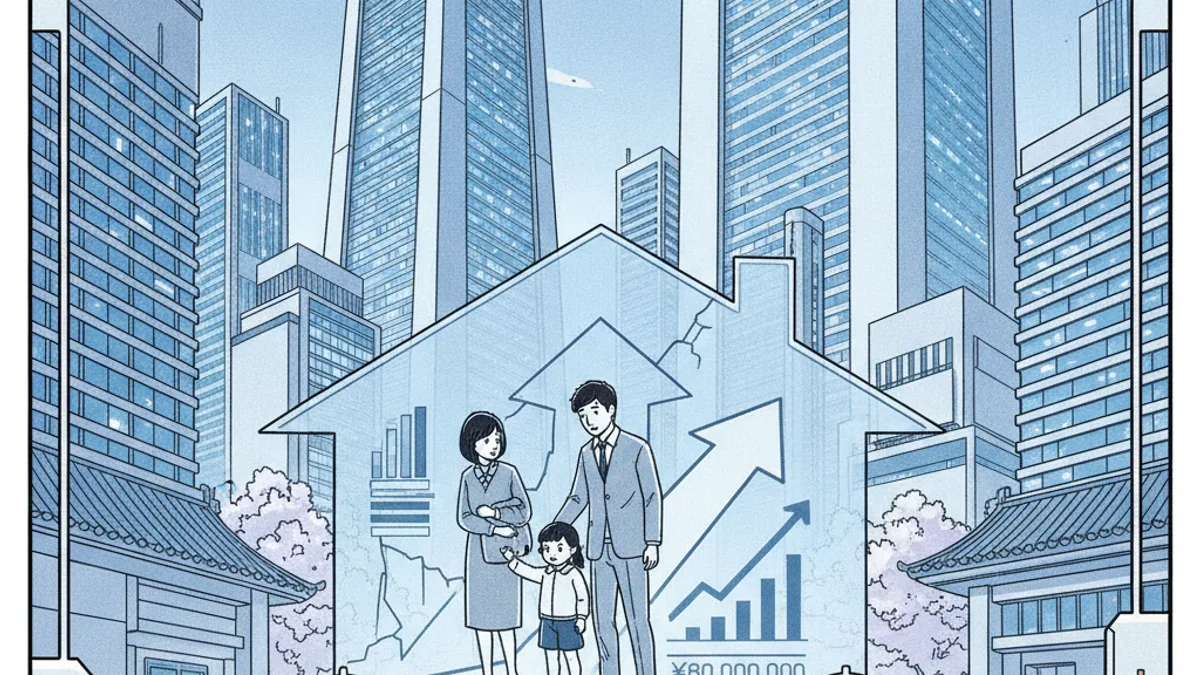
Rising Interest Rates Create Housing Crisis for Japan Homeowners
Rising interest rates and soaring property prices are straining homeowners while creating barriers for buyers. Tokyo's market shows an 80 million yen purchasing limit, with regulators now monitoring long-term loans more closely.
Key Points
- • Financial Services Agency now closely monitoring ultra-long-term mortgage lending practices nationwide.
- • Tokyo's outer wards show 80 million yen as practical purchase limit.
- • Variable-rate mortgage holders face increasing monthly payments as rates rise.
- • Stricter income verification expected for expats seeking housing loans going forward.
Foreign residents and Japanese homeowners alike are facing mounting financial pressure as rising interest rates and soaring property prices create unprecedented challenges in Japan's housing market. Recent developments suggest both immediate concerns for current mortgage holders and significant barriers for prospective buyers, particularly in Tokyo's competitive real estate landscape.
According to reports from Yahoo Japan Business and NHK, homeowners with existing mortgage obligations are experiencing growing anxiety as interest rates climb. While Japan maintained near-zero interest rates for decades, the Bank of Japan's recent policy shifts have triggered increases that directly impact monthly mortgage payments. For expats who secured variable-rate mortgages during the ultra-low interest rate period, this represents a significant change in their financial planning assumptions.
The Financial Services Agency (FSA) has taken notice of these market dynamics and announced enhanced monitoring of ultra-long-term housing loans, according to NHK. The agency will scrutinize whether financial institutions are appropriately assessing borrowers' income levels and ability to repay when extending these lengthy mortgage products. This regulatory attention comes as lenders have increasingly offered extended repayment periods—sometimes stretching beyond traditional 35-year terms—to help borrowers qualify despite rising property prices and interest rates.
For expats considering property purchases, the FSA's heightened scrutiny could mean more rigorous income verification and stricter lending standards. Foreign residents may face additional documentation requirements to demonstrate stable, long-term income prospects, particularly given that many expats work on renewable employment contracts rather than traditional permanent positions.
The Tokyo metropolitan area presents particularly stark challenges. According to Livedoor News, the used condominium market in Tokyo's 23 wards is experiencing a marked decline in liquidity. In the central five wards (Chiyoda, Chuo, Minato, Shinjuku, and Shibuya), properties remain unsold even after price reductions, with average transaction prices hovering around 120 million yen. This price point places these properties far beyond reach for most individual buyers, including the majority of foreign residents.
Meanwhile, in the remaining 18 wards, a clear "80 million yen wall" has emerged as the practical purchasing limit for actual homebuyers. This threshold reflects the maximum amount that typical buyers—considering their income levels, available down payments, and mortgage approval limits under current interest rates—can realistically afford. For expats earning competitive salaries in professional fields, this 80 million yen ceiling may still allow access to decent properties in outer Tokyo wards, though choices remain limited.
The combination of rising interest rates and elevated property prices creates a double squeeze. Higher rates mean larger monthly payments, while expensive properties require bigger loans. Even a modest interest rate increase can add tens of thousands of yen to monthly obligations on a substantial mortgage. For foreign residents planning to remain in Japan long-term, these factors demand careful financial analysis before committing to property purchases.
Experts suggest that prospective buyers—both Japanese and foreign—should stress-test their budgets against potential further rate increases. Financial advisors recommend ensuring monthly mortgage payments remain below 25-30% of gross income, even if rates rise by an additional 1-2 percentage points. This conservative approach provides a buffer against future rate hikes and unexpected financial challenges.
For expats currently renting, the decision to buy has become more complex. While property ownership offers stability and potential long-term value, the current market conditions favor caution. Those uncertain about their long-term plans in Japan may find continued renting more financially prudent until market conditions stabilize.
The FSA's monitoring initiative suggests regulators recognize the systemic risks posed by overleveraged homeowners. Foreign residents should view this as both a warning and a protection—while lending standards may tighten, this scrutiny helps prevent the type of unsustainable borrowing that precipitated housing crises in other countries.
Sources
This article was written by AI from these Japanese-language reports. Check them before acting on anything here.
- [1] Yahoo! Japan News — original report (Japanese)
- [2] NHK — original report (Japanese)
- [3] Livedoor News — original report (Japanese)
AI-written summary of Japanese reports; not human-reviewed; check the linked sources. How we write articles