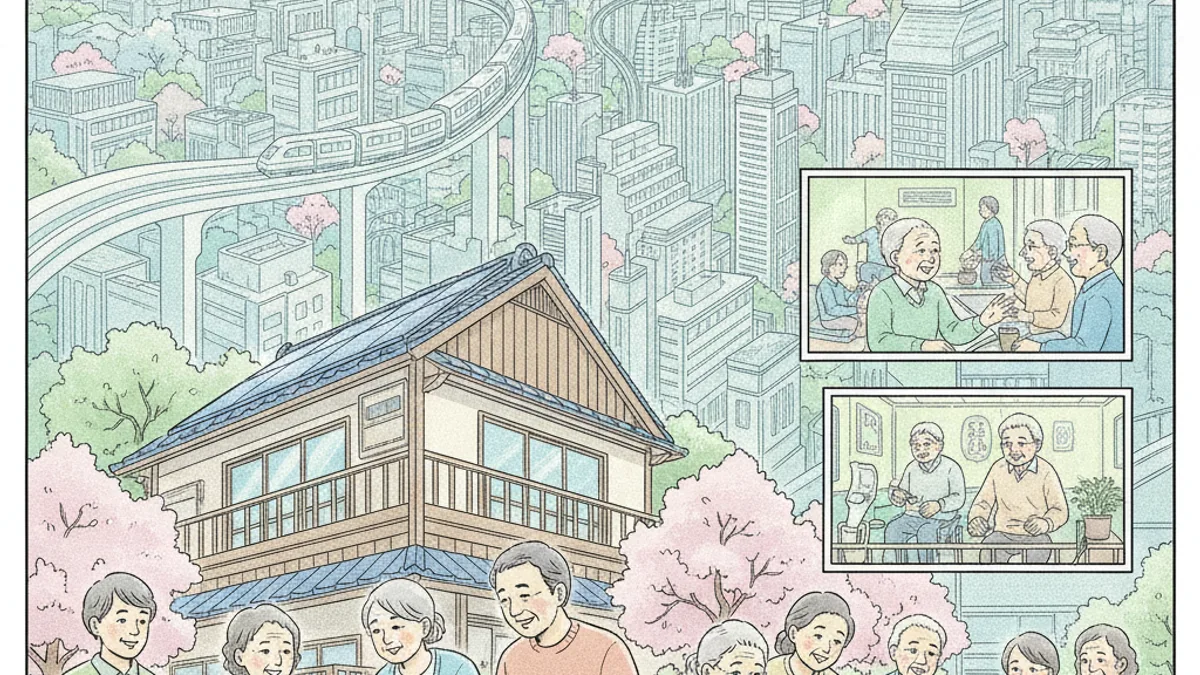
Single-Elderly Households Hit Record 9.3 Million as Japan Ages Rapidly
Japan's single elderly households reached a record 9.3 million, the highest since 1986. This demographic shift impacts housing, healthcare jobs, and community life for foreign residents.
Key Points
- • Single elderly households exceeded 9.3 million, highest since records began in 1986.
- • Healthcare and elderly care sectors offer growing employment opportunities for foreign professionals.
- • Housing demand shifting toward smaller, accessible apartments near medical facilities and transit.
- • First-time majority of child-rearing households now have only one child, affecting communities.
Japan's demographic transformation has reached a new milestone, with single-person elderly households surpassing 9.3 million for the first time since records began in 1986, according to recent data released by the Ministry of Health, Labour and Welfare. This development underscores the accelerating pace of population aging and carries significant implications for foreign residents living and working in the country.
The latest statistics reveal that households consisting of individuals aged 65 and older living alone now represent a substantial and growing segment of Japanese society. This trend reflects multiple converging factors: Japan's well-documented aging population, declining birth rates, and changing family structures where multi-generational living arrangements have become less common. For expats, understanding these demographic shifts is crucial for navigating everything from housing markets to community dynamics and social services.
The surge in elderly single-person households has profound implications for Japan's social infrastructure and policy priorities. Local governments across the country are grappling with increased demand for elderly care services, medical facilities, and social support systems. This demographic reality is already reshaping urban planning, with many municipalities adapting public spaces and transportation to accommodate older residents living independently. Foreign residents may notice these changes in their neighborhoods, from increased accessibility features in public buildings to expanded community support programs.
For expats working in Japan, this demographic trend presents both challenges and opportunities. The healthcare and elderly care sectors are experiencing unprecedented demand, creating employment opportunities for qualified foreign professionals. Japan has gradually expanded visa categories for care workers and medical professionals in response to labor shortages in these fields. Additionally, businesses catering to elderly populations—from technology solutions to food delivery services—represent growing market segments that may interest foreign entrepreneurs and investors.
The housing market is also feeling the effects of this demographic shift. With more elderly individuals living alone, demand patterns are changing, particularly for smaller, accessible apartments in areas with good access to medical facilities and public transportation. Foreign residents searching for rental properties may find themselves competing in markets where landlords increasingly consider the needs of elderly tenants. Conversely, some areas with aging populations may offer more affordable housing options as younger families relocate to urban centers.
Concurrent data released alongside the elderly household statistics shows that households with children are also transforming. For the first time, households with only one child have exceeded 50 percent of all child-rearing families, according to Yahoo Japan's reporting. This parallel trend reinforces the broader demographic challenges facing Japan and may influence everything from school enrollments to family-oriented services in expat communities.
The implications extend to community life and social integration. As neighborhoods age, foreign residents may find fewer young families and children in their areas, potentially affecting the availability of international schools, family events, and community activities. However, this also presents opportunities for cultural exchange, as elderly Japanese residents often have more time for community engagement and may welcome interaction with foreign neighbors.
For expats planning long-term stays in Japan, these demographic trends warrant consideration in personal planning. Understanding the evolving social landscape can inform decisions about where to live, career directions, and community involvement. The Japanese government continues to develop policies addressing population aging, and foreign residents should stay informed about changes to social services, healthcare access, and community support programs.
As Japan navigates this demographic transition, the record number of single elderly households represents not just a statistical milestone but a fundamental reshaping of Japanese society that will influence the expat experience in countless ways for years to come.