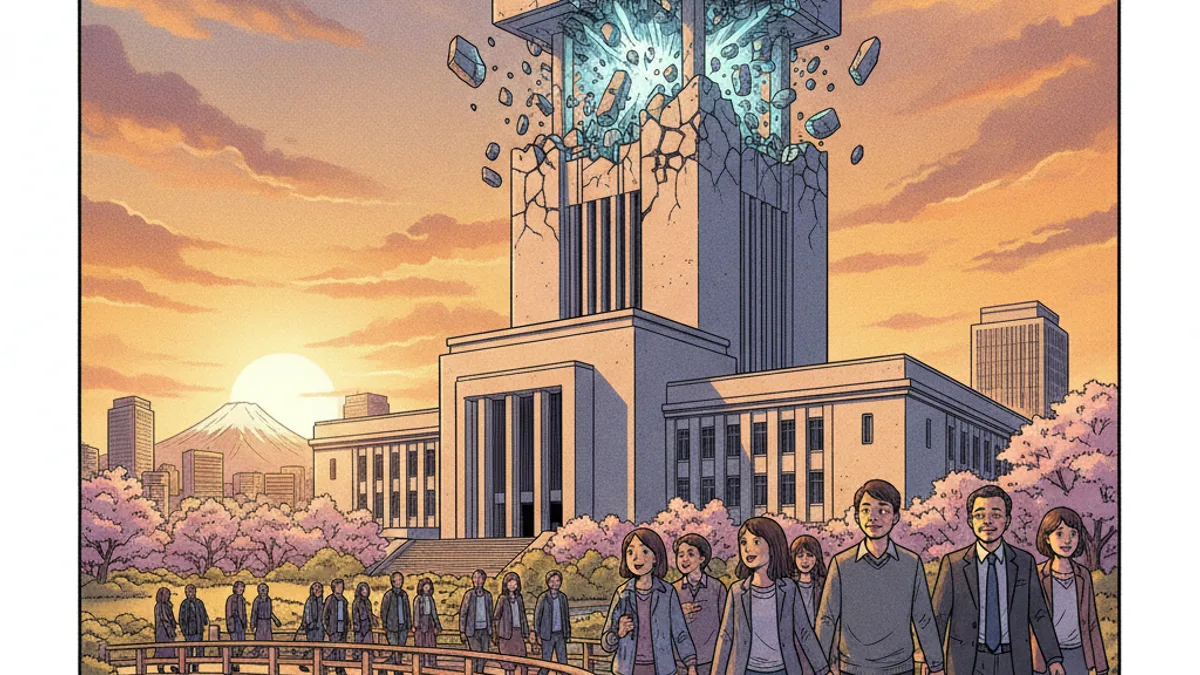
Supreme Court Finalizes Dissolution Order for Unification Church
Japan's Supreme Court finalized the Unification Church dissolution order, rejecting appeals and stripping its legal status. Experts urge victim compensation and support systems for departing members.
Key Points
- • Supreme Court rejected church's final appeal on June 23, 2026.
- • Dissolution removes tax benefits and property ownership rights, not religious activities.
- • Victims entitled to compensation; support systems needed for departing members.
- • Decision upholds consumer protection laws over organizational religious freedom claims.
Japan's Supreme Court has finalized a landmark dissolution order against the Family Federation for World Peace and Unification, commonly known as the Unification Church, rejecting the organization's final legal challenge on June 23, 2026. This decision marks a definitive conclusion to a high-profile case that has drawn significant attention from both Japanese society and the international community.
According to NHK, the Supreme Court dismissed the church's special appeal, ruling that the dissolution order does not violate constitutional protections. The court's decision upholds earlier rulings that found the organization engaged in systematic illegal activities, including high-pressure donation solicitation and spiritual sales tactics that caused substantial harm to victims and their families.
The case against the former Unification Church gained momentum following revelations about its fundraising practices and the organization's connections to various social issues in Japan. The dissolution order, originally issued by lower courts, was based on evidence of repeated legal violations and the organization's failure to prevent harm to members and their families through coercive donation practices and what authorities described as exploitative spiritual commerce.
For foreign residents in Japan, this ruling represents an important development in understanding Japan's approach to religious organizations and consumer protection. While Japan's constitution guarantees religious freedom, the court's decision establishes that this protection does not extend to organizations that systematically violate civil law or cause demonstrable harm to individuals.
The dissolution order does not criminalize membership in the organization or ban religious activities outright. Instead, it strips the church of its legal status as a religious corporation, which carries significant practical implications. Without this status, the organization loses tax benefits, the ability to own property under its corporate name, and official recognition that facilitates various administrative processes in Japan.
According to NHK, legal experts emphasize that the finalization of this order should be accompanied by two critical societal responses. First, authorities and support organizations must accelerate efforts to provide relief and compensation to victims who suffered financial and psychological harm from the church's practices. Second, and particularly relevant for understanding Japan's social support systems, experts stress the need for society to develop robust mechanisms to help individuals who wish to leave the organization reintegrate into mainstream life.
This second point highlights an important aspect of Japanese civil society that expats should understand. Support systems for individuals leaving high-control groups remain underdeveloped in Japan compared to some Western countries. Experts quoted by NHK called for creating comprehensive acceptance frameworks that can help former members rebuild their lives, access counseling services, and reconnect with family members from whom they may have become estranged.
The church responded to the Supreme Court's decision by expressing regret, according to Yahoo Japan, though the organization has not announced whether it will continue operations in an unofficial capacity or dissolve entirely. The practical enforcement of the dissolution order will unfold over coming months as authorities work through the complex process of unwinding the organization's legal structures and assets.
For expats, this case serves as an important reminder to exercise caution with any organization that employs high-pressure tactics, requests substantial financial commitments, or discourages contact with family and friends. Japan's consumer protection laws and religious corporation regulations exist to prevent exploitation, and this ruling demonstrates that courts will enforce these protections even against established religious organizations.
The Supreme Court's decision represents a significant moment in Japanese legal history, balancing constitutional religious freedoms against the state's responsibility to protect citizens from organizational harm. As the dissolution process moves forward, attention will focus on victim compensation and the development of support systems for those seeking to leave the organization.