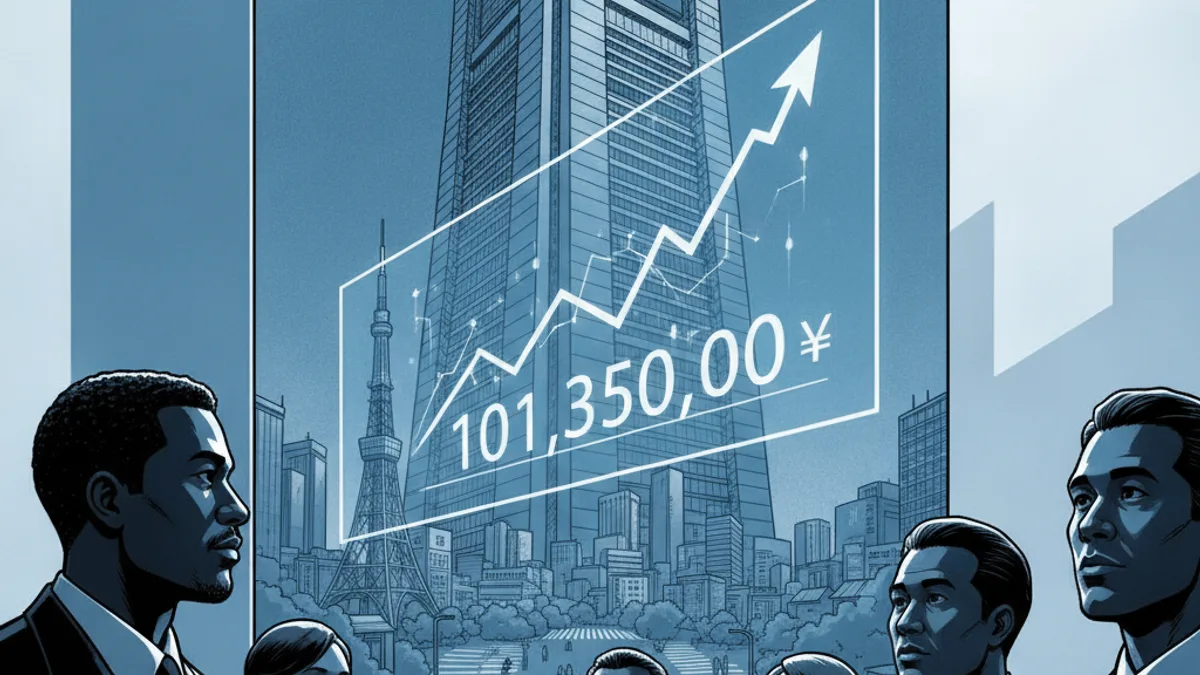
Tokyo Area Condominium Prices Break 100 Million Yen Barrier
Tokyo area new condominium prices averaged 101.35 million yen in first half 2026, crossing 100 million yen for the first time. Rising costs impact both purchase and rental markets for foreign residents.
Key Points
- • Average new condominium price reached 101.35 million yen in first half 2026.
- • Tokyo metropolitan area includes Tokyo, Kanagawa, Saitama, and Chiba prefectures.
- • Foreign buyers face stricter mortgage requirements and additional documentation needs.
- • Rising property values are increasing rental rates across the metropolitan area.
The Tokyo metropolitan area's real estate market has reached a historic milestone, with new condominium prices exceeding 100 million yen for the first time during the first half of 2026, according to recent industry data reported by NHK.
The average price for new condominiums sold across Tokyo and the three surrounding prefectures of Kanagawa, Saitama, and Chiba reached 101.35 million yen (approximately $700,000 USD) during the January to June period, marking the first time in recorded history that first-half prices have crossed the 100 million yen threshold.
This unprecedented price level represents a continuation of the sharp upward trajectory that has characterized Tokyo's housing market in recent years. The milestone underscores the increasingly challenging affordability situation facing both Japanese residents and foreign nationals seeking to purchase property in the greater Tokyo area.
For expatriates and long-term foreign residents considering home ownership in Japan, this development carries significant implications. The Tokyo metropolitan area, which encompasses roughly one-third of Japan's population and serves as the primary destination for international workers and their families, has traditionally offered a range of housing options across various price points. However, the breach of the 100 million yen average suggests that entry into the property market is becoming substantially more difficult.
Several factors have contributed to this dramatic price escalation. Construction costs have risen significantly due to labor shortages and increased material expenses. Additionally, land scarcity in desirable central locations continues to drive competition among developers and buyers alike. The weak yen has also attracted foreign investment in Japanese real estate, adding further upward pressure on prices.
The impact varies considerably depending on location within the metropolitan area. Central Tokyo wards such as Minato, Shibuya, and Chiyoda have long commanded premium prices, with new condominiums frequently exceeding 150 million yen. However, the rising average indicates that even outlying areas in Saitama and Chiba, traditionally viewed as more affordable alternatives, are experiencing significant price appreciation.
For foreign residents employed in Japan, particularly those on corporate assignments or working for international companies, these price levels may necessitate a reassessment of home ownership plans. Many expatriates who previously considered purchasing property as a long-term investment or residence may find themselves priced out of the market or forced to look at locations significantly farther from central business districts.
Rental markets have also felt the ripple effects of rising property values. As purchase prices climb, landlords often adjust rental rates upward to reflect their investment costs and opportunity costs of capital. This creates a challenging situation where both ownership and rental options become increasingly expensive simultaneously.
Financial institutions have responded to high property prices by maintaining relatively low interest rates on housing loans, though qualification requirements remain stringent. Foreign nationals seeking mortgages in Japan typically face additional documentation requirements, including proof of long-term residency status and stable employment history.
Prospective buyers should carefully evaluate their long-term plans in Japan before committing to property purchase at current price levels. Those on limited-term work assignments may find that the transaction costs, taxes, and potential price volatility make ownership less attractive than renting. Conversely, foreign residents with permanent residency status and long-term career prospects in Japan may view current prices as the new normal in a market with limited downward pressure.
The 100 million yen milestone serves as a stark reminder of Tokyo's position among the world's most expensive real estate markets, alongside cities like Hong Kong, Singapore, and London. For the expatriate community, understanding these market dynamics is essential for making informed housing decisions and financial planning while living in Japan.