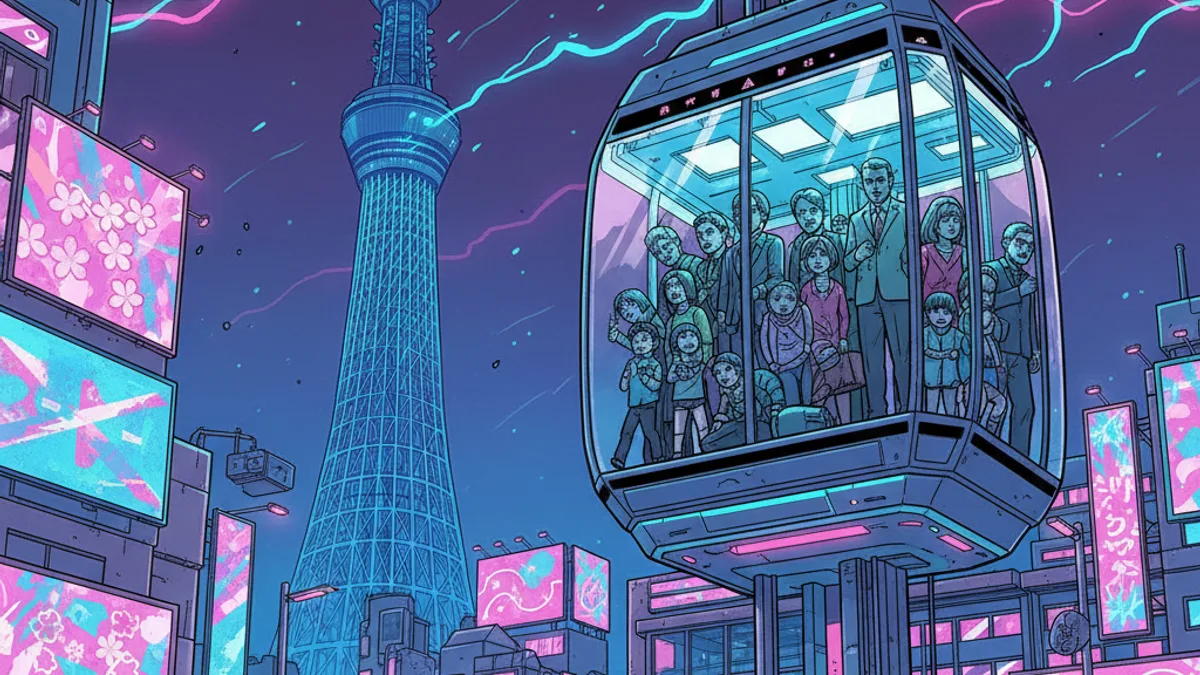
Tokyo Skytree Elevator Emergency Traps 20 Visitors for Over 5 Hours
Twenty people, including children, were trapped in a Tokyo Skytree elevator for over 5.5 hours on February 22. The facility remains closed for inspections, with strong winds suspected as the cause.
Key Points
- • Tokyo Skytree closed through February 24 following five-hour elevator entrapment incident.
- • Strong winds may have triggered emergency stop affecting 20 visitors including children.
- • Check official website before visiting; facility reopening date remains unannounced.
- • Alternative observation decks available at Tokyo Tower and Metropolitan Government Building.
Tokyo's iconic Skytree observation tower has remained closed for multiple days following a serious elevator malfunction that trapped 20 people, including children, for more than five and a half hours on the evening of February 22, 2026.
According to NHK, the elevator suddenly stopped while carrying visitors, leaving them confined in the car from evening until early morning. The incident has prompted the operating company to suspend all operations while conducting comprehensive safety inspections. The facility remained closed on February 23 and extended its closure through February 24 as investigators work to determine the cause of the malfunction.
The emergency occurred at one of Tokyo's most popular tourist attractions, which typically draws thousands of visitors daily, including many foreign tourists and expat residents. The 634-meter tall tower, which opened in 2012, features observation decks at 350 meters and 450 meters above ground, accessible via high-speed elevators that normally complete the journey in under a minute.
Reports suggest that strong winds may have triggered the elevator's emergency stop mechanism, according to Livedoor News. Tokyo experienced notably windy conditions on February 22, which could have activated safety protocols designed to protect passengers during extreme weather. However, the extended duration of the entrapment has raised questions about emergency response procedures and backup systems.
All 20 trapped individuals were eventually freed without reported injuries, though the psychological impact of spending more than five hours confined in an elevator cannot be understated. The incident highlights the importance of understanding emergency procedures when visiting high-rise attractions in Japan, particularly for foreign visitors who may face language barriers during crisis situations.
For expats living in or visiting Tokyo, this incident serves as a reminder to familiarize yourself with emergency protocols at major tourist facilities. Japanese buildings typically have robust safety systems, but understanding what to expect during emergencies can reduce anxiety if you find yourself in a similar situation. Most modern elevators in Japan are equipped with emergency communication systems, ventilation, and lighting designed to sustain passengers during extended waits.
The Tokyo Skytree operating company has not announced when normal operations will resume. The extended closure suggests authorities are conducting thorough inspections beyond routine maintenance checks. This level of caution reflects Japan's generally conservative approach to public safety, where facilities often remain closed until officials can guarantee complete safety rather than rushing to reopen.
Visitors planning trips to Tokyo Skytree should check the official website or contact the facility directly before traveling to confirm operational status. The closure affects not only the observation decks but potentially other elevator-dependent areas of the complex. Alternative Tokyo observation points include Tokyo Tower, the Metropolitan Government Building in Shinjuku (which offers free observation decks), and Roppongi Hills' Mori Tower.
This incident also raises broader questions about infrastructure maintenance at aging tourist facilities. While Tokyo Skytree is relatively new compared to other landmarks, the intensive daily use of its elevator systems subjects them to significant wear. Japan's rigorous inspection standards typically prevent such incidents, making this malfunction particularly noteworthy.
For foreign residents, the event underscores the importance of having emergency contact information readily available and understanding basic emergency Japanese phrases. Phrases like "tasukete kudasai" (please help) and "daijoubu desu ka" (are you okay?) can be crucial during emergencies.
As investigations continue, updates will likely be provided through official channels and major news outlets. Expats should monitor NHK and other reliable news sources for information about when Tokyo Skytree will safely reopen to visitors.
Sources
This article was written by AI from these Japanese-language reports. Check them before acting on anything here.
- [1] NHK — original report (Japanese)
- [2] Livedoor News — original report (Japanese)
AI-written summary of Japanese reports; not human-reviewed; check the linked sources. How we write articles