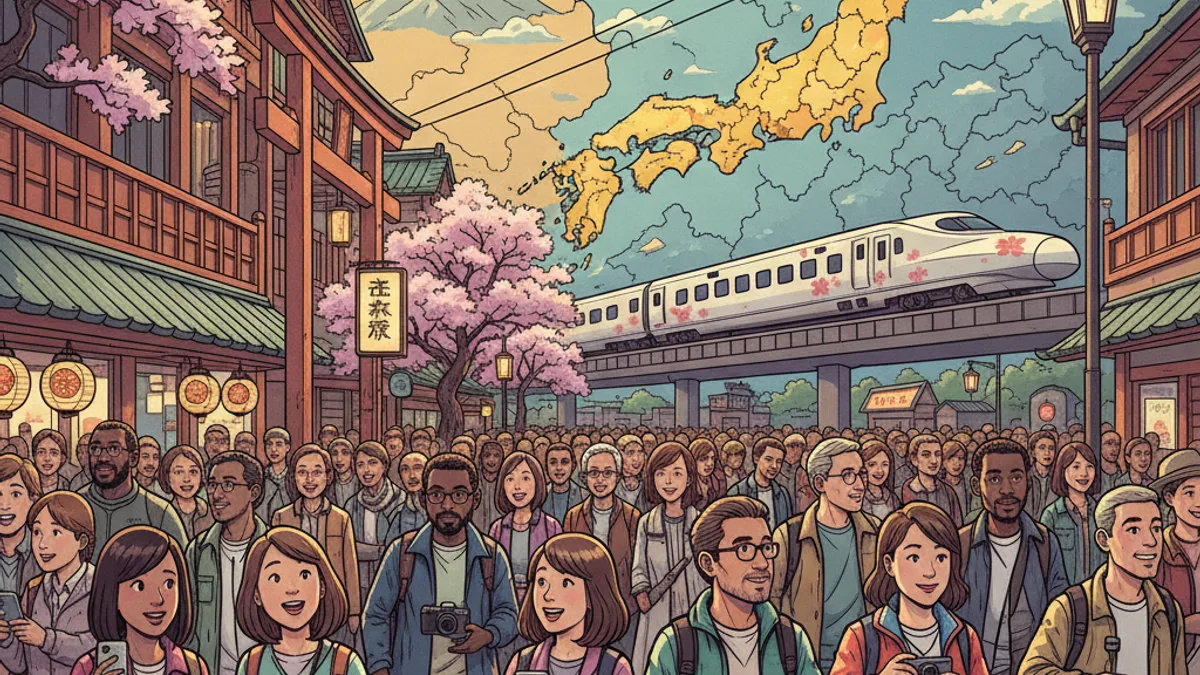
Tourism Boom Bypasses Most of Japan: 7 Prefectures Dominate Foreign Visits
Foreign tourists overwhelmingly concentrate in seven prefectures, with 72 of Japan's top 100 destinations located there, while 25 prefectures have no top-100 sites, creating stark regional disparities.
Key Points
- • Seven prefectures contain 72 of Japan's top 100 tourist destinations.
- • Twenty-five prefectures have zero representation among top 100 tourist sites.
- • Expats in popular areas face ongoing overcrowding and higher accommodation costs.
- • Undervisited prefectures offer authentic experiences without tourist crowds or premium pricing.
A new analysis reveals a stark geographic imbalance in Japan's tourism recovery, with foreign visitors overwhelmingly concentrated in just seven prefectures while vast swaths of the country see minimal international traffic. The findings, reported by Yahoo Japan Business and Livedoor News, highlight significant disparities that have implications for both travelers and foreign residents across Japan.
According to the joint analysis published in May 2026, seven prefectures dominate Japan's inbound tourism landscape. These areas account for a disproportionate share of foreign visitor activity, with 72 of the top 100 tourist destinations located within these seven prefectures. Meanwhile, 25 prefectures have no representation whatsoever among the top 100 destinations, underscoring the extreme concentration of international tourism.
While the specific seven prefectures were not detailed in available reports, the concentration pattern likely includes traditional tourist magnets such as Tokyo, Kyoto, Osaka, and other major urban centers alongside iconic destinations like Mount Fuji's Yamanashi Prefecture. This clustering reflects well-established travel patterns where first-time visitors to Japan tend to follow the "Golden Route" of Tokyo-Hakone-Kyoto-Osaka, with limited exploration beyond these core areas.
For expats living in Japan, this tourism concentration has several practical implications. Those residing in the seven popular prefectures may experience ongoing challenges with overcrowding at popular sites, higher accommodation costs during peak seasons, and increased strain on local infrastructure and services. Popular neighborhoods in cities like Tokyo and Kyoto have already seen tensions between residents and the tourism industry, with some areas implementing measures to manage visitor flows.
Conversely, foreign residents living in the 25 prefectures without top-100 destinations may find their local economies receiving limited benefit from Japan's tourism boom. This could affect everything from the availability of English-language services to international dining options, as businesses in these areas have less incentive to cater to foreign visitors. However, it also means these regions typically offer more authentic, less commercialized experiences for those seeking to explore beyond the tourist trail.
The geographic imbalance also presents opportunities for expats who enjoy domestic travel. The 25 undervisited prefectures likely offer rich cultural experiences, natural beauty, and local traditions without the crowds plaguing major tourist centers. Regions in Tohoku, Shikoku, and rural areas of Kyushu often provide stunning landscapes, unique festivals, and warm hospitality at more affordable prices than their tourist-heavy counterparts.
From a policy perspective, this concentration challenges Japan's stated goal of dispersing tourism benefits more evenly across the country. The national government and regional authorities have promoted various initiatives to encourage visitors to explore lesser-known areas, including enhanced transportation links, multilingual information services, and marketing campaigns highlighting regional attractions. However, these efforts have clearly achieved limited success if the vast majority of foreign visitors remain clustered in the same handful of prefectures.
The findings also raise questions about sustainability and quality of life in overtouristed areas. As Japan continues to welcome increasing numbers of foreign visitors, managing this geographic imbalance will be crucial for ensuring tourism benefits local communities without degrading the experience for residents and visitors alike.
For expats planning to host visiting friends and family, consider introducing them to destinations beyond the usual circuit. Many of Japan's most memorable experiences lie in its less-visited regions, where authentic cultural encounters and natural wonders await without the crowds. By venturing beyond the seven dominant prefectures, visitors can discover a more diverse and nuanced picture of contemporary Japan while helping to distribute tourism's economic benefits more equitably across the country.