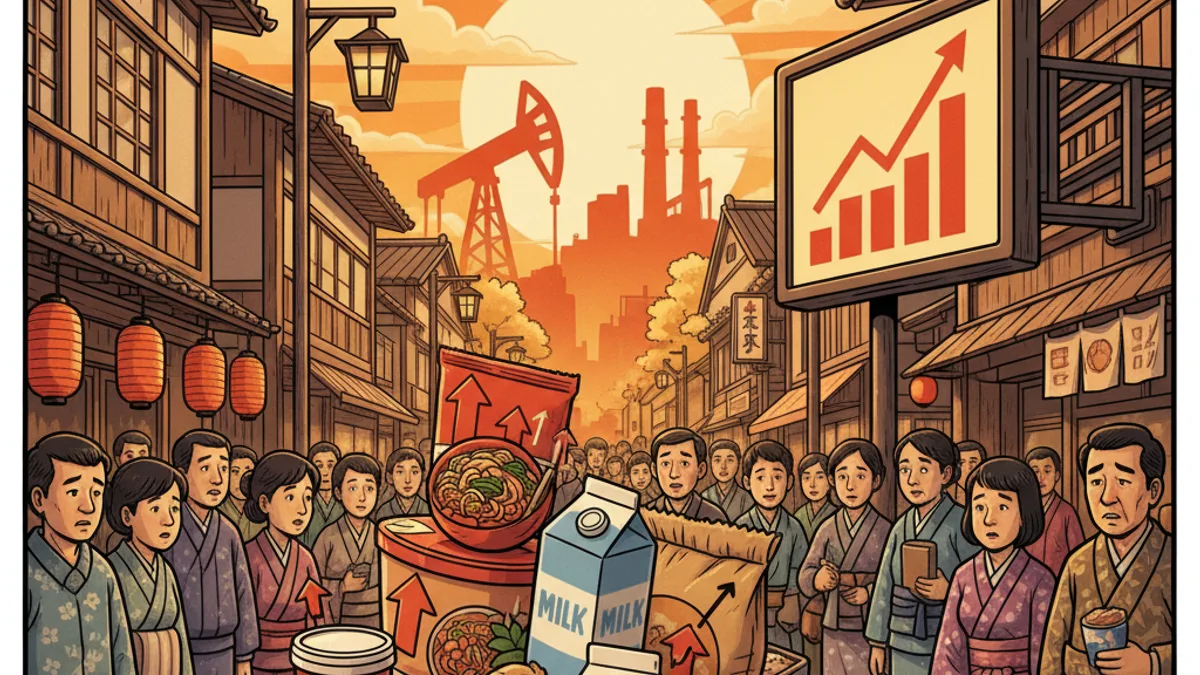
April 2025: Nearly 2,800 Food Items Face Price Increases in Japan
Nearly 2,800 food items will increase in price across Japan this April 2025, the highest number since October 2024. Analysts warn Middle East tensions may trigger further increases later this year.
Key Points
- • 2,798 food products increase in price starting April 2025 across Japan.
- • First time exceeding 2,000 items since October 2024, affecting most groceries.
- • Middle East instability may intensify price increases in late 2025.
- • Consider bulk buying, discount retailers, and local products to manage costs.
Foreign residents in Japan should prepare for significant grocery price increases this April, as nearly 2,800 food items are set to become more expensive. According to NHK, citing data from private research firm Teikoku Databank, 2,798 food products will see price hikes starting this month, marking the first time since October 2024 that price increases have exceeded 2,000 items in a single month.
The scale of these increases has prompted concern among consumers, with Livedoor News reporting widespread anxiety about household budgets. The phrase "the future looks bleak" has become a common refrain among shoppers facing yet another round of price adjustments in what has been an extended period of food inflation in Japan.
The price increases span multiple categories of everyday essentials that expats regularly purchase. While specific product names weren't detailed in the reports, the sheer number of affected items suggests that most shopping baskets will be impacted. This comes as particularly unwelcome news for foreign residents who may already be managing currency exchange challenges and sending money abroad to family members.
According to NHK, analysts at Teikoku Databank have warned that the situation may deteriorate further as the year progresses. The research firm specifically cited ongoing instability in the Middle East as a key factor that could intensify price increase momentum in the latter half of 2025. This geopolitical uncertainty affects global supply chains and energy costs, which ultimately translate to higher prices at Japanese supermarkets and convenience stores.
For expats living in Japan, these price increases compound existing financial pressures. Many foreign residents already face higher living costs compared to their home countries, and the weakened yen over recent years has made imports particularly expensive. With nearly 2,800 items affected, avoiding price increases by switching brands or products will be challenging.
The timing is significant as well. April marks the beginning of Japan's fiscal year, when many companies implement annual price adjustments. This year's increases follow a pattern of sustained food inflation that has affected Japanese households since 2022, driven by factors including rising energy costs, supply chain disruptions, and the yen's depreciation against major currencies.
Experts suggest several strategies for managing these increases. First, consider adjusting shopping habits by comparing prices across different retailers more carefully. Discount supermarkets and business-oriented stores often offer better value than convenience stores. Second, buying in bulk for non-perishable items before prices rise can provide short-term savings. Third, exploring more seasonal and locally-produced foods may help avoid some of the import-driven price increases.
Foreign residents should also be aware that these increases may affect their cost-of-living calculations, particularly those on fixed contracts or those planning their finances for the year ahead. If you're negotiating salary or considering job changes, factoring in continued food inflation is prudent.
The government has implemented some measures to address inflation, including subsidies for energy costs, but these have not prevented food prices from rising. The Bank of Japan's monetary policy decisions will also play a role in how prices develop throughout 2025.
As Japan continues to navigate global economic uncertainties, foreign residents should prepare for potential additional price increases beyond April. Monitoring announcements from major food manufacturers and retailers, staying informed about exchange rate movements, and maintaining flexible household budgets will be essential strategies for managing living costs in Japan this year. The situation underscores the importance of financial planning and adaptability for expats navigating Japan's evolving economic landscape.