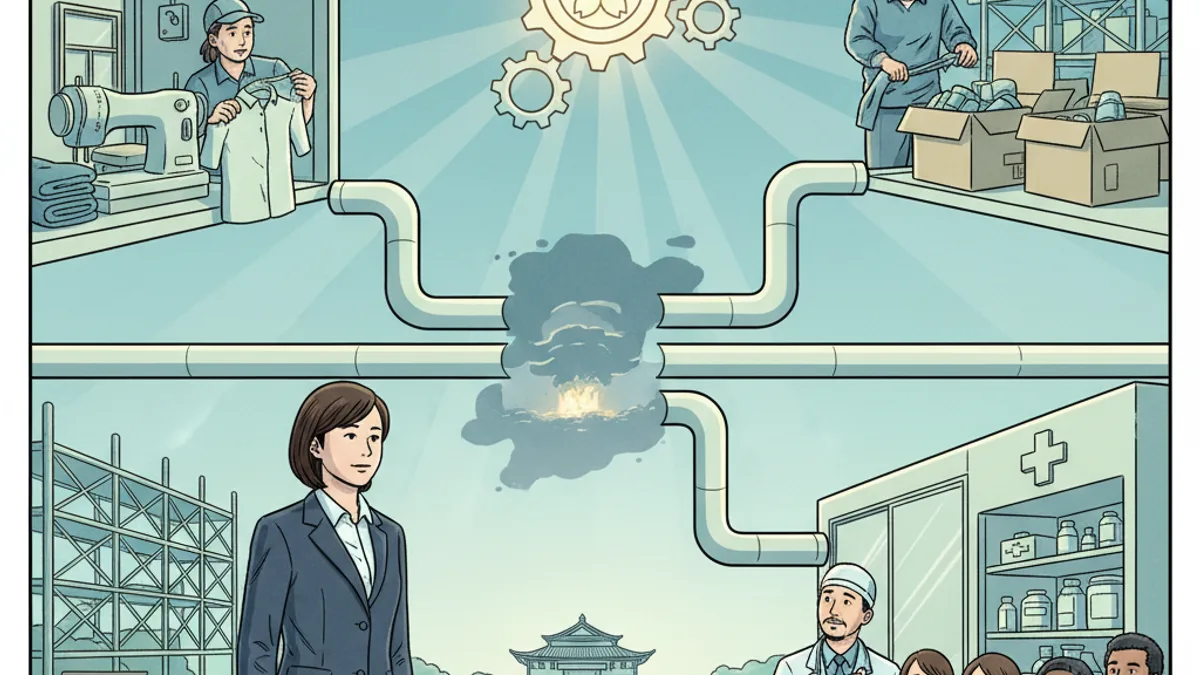
Middle East Crisis Threatens Japan's Supply Chain: Naphtha Shortage Impacts Multiple Industries
Middle East tensions are causing naphtha shortages in Japan, prompting government emergency measures. Price increases expected for clothing, construction materials, and potential medical supply disruptions affecting expat residents.
Key Points
- • Japan doubling non-Middle East naphtha imports to 900,000 kiloliters in April 2026.
- • Toray announced price increases for nylon and polyester yarns effective immediately.
- • Joint government task force established to prevent medical supply shortages.
- • Construction and housing costs likely rising due to naphtha-based material shortages.
Foreign residents in Japan may soon feel the effects of escalating tensions in the Middle East as the country faces a critical shortage of naphtha, a petroleum product essential to manufacturing everything from clothing to medical supplies. The Iranian situation has prompted the Japanese government to launch emergency measures to secure alternative supply sources and prevent widespread disruptions across multiple industries.
Naphtha, a light petroleum distillate, serves as a crucial raw material for producing plastics, synthetic fibers, and numerous chemical products that form the backbone of Japan's manufacturing sector. According to NHK, the Ministry of Economy, Trade and Industry (METI) has been working with private companies to diversify procurement sources, with April 2026 projections showing imports from non-Middle Eastern sources reaching 900,000 kiloliters—double the normal volume.
Prime Minister Takaichi convened a meeting of relevant cabinet ministers on March 30th to address the crisis, instructing newly appointed Economy Minister Akazawa to lead a special task force focused on ensuring stable petroleum product supplies. The government is also coordinating with Asian nations to strengthen regional supply chains, according to NHK reporting.
The shortage is already creating tangible impacts for consumers. Major textile manufacturer Toray announced price increases for nylon and polyester yarns on March 31st, citing soaring costs of fiber raw materials derived from naphtha. This development signals potential price hikes for clothing and textile products in the coming months, which could affect household budgets for expat families living in Japan.
The construction and housing sectors face similar pressures. Yahoo Japan Business reported that the "naphtha crisis" is hitting the housing industry particularly hard, as many building materials, including plastics and synthetic components used in modern construction, rely on naphtha-based products. Foreign residents planning home renovations or purchases may encounter delays or increased costs.
Perhaps most concerning is the impact on healthcare supplies. The shortage has created procurement difficulties for medical materials, prompting METI and the Ministry of Health, Labour and Welfare to establish a joint task force on March 31st. According to NHK, the task force will coordinate rapid responses, including requesting increased production from material manufacturers to ensure adequate supplies of essential medical products. This development is particularly relevant for expat families who depend on Japan's healthcare system.
The government's multi-pronged response demonstrates the severity of the situation. Minister Akazawa is leading efforts to create cross-ministerial coordination systems that transcend traditional bureaucratic boundaries, ensuring swift action when supply constraints emerge. The special task force approach allows for real-time monitoring and adjustment of strategies as the Middle East situation evolves.
For foreign residents, these developments underscore Japan's vulnerability to global supply chain disruptions despite being the world's third-largest economy. The country's heavy reliance on Middle Eastern petroleum imports—a legacy of limited domestic energy resources—means international crises can quickly translate into local economic impacts.
Experts suggest the situation could persist for several months, depending on how tensions in Iran develop. The government's aggressive diversification strategy aims to mitigate immediate risks, but establishing stable alternative supply chains takes time. Industries across Japan are being forced to adapt quickly, with manufacturers exploring substitutes and adjusting production processes where possible.
While the government has not announced consumer rationing measures, foreign residents should monitor developments closely. Price increases for everyday items—from clothing to household goods—appear likely in the near term. Those working in affected industries, particularly manufacturing, textiles, construction, and healthcare, may experience workplace impacts ranging from production adjustments to supply chain modifications.
The crisis serves as a reminder of Japan's interconnected economy and how global events can ripple through daily life, even for those far from conflict zones. Staying informed through official government channels and major news outlets will help expat residents anticipate and prepare for potential disruptions in the months ahead.