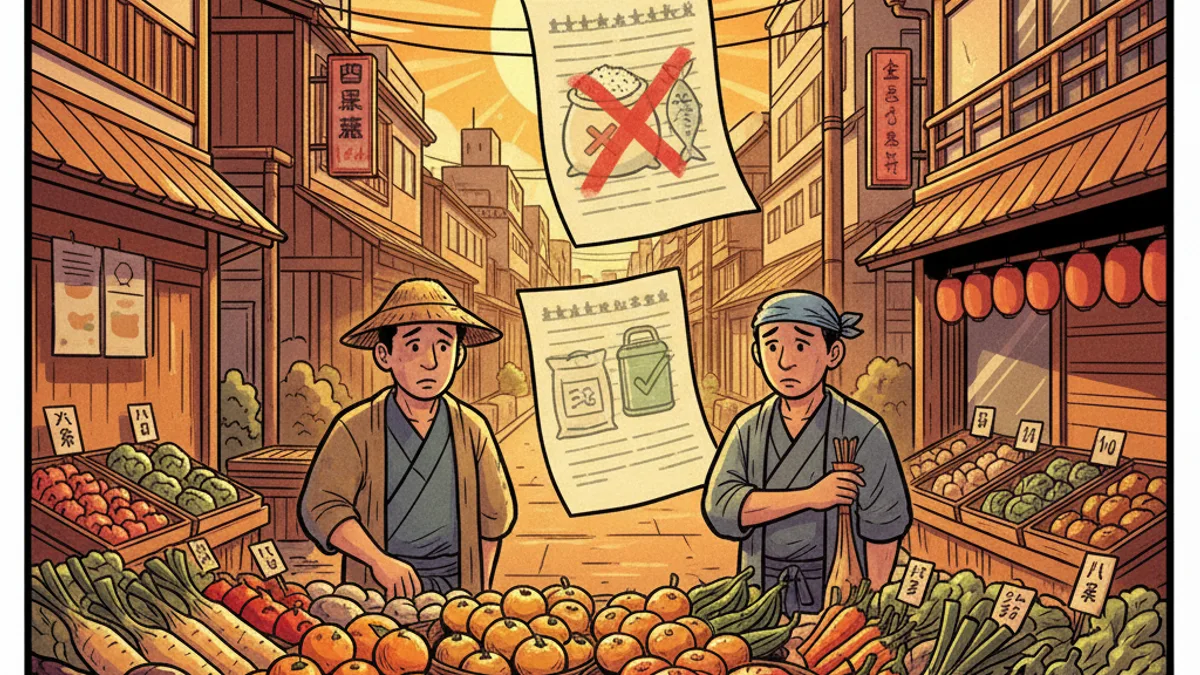
Food Tax Elimination Proposal Sparks Concerns from Japan's Producers
Agriculture and fishery groups express concerns about proposed food tax elimination, citing complexity as producers would still pay consumption tax on inputs like fertilizers and fuel while selling tax-free products.
Key Points
- • Producers would still pay consumption tax on fertilizers and fuel inputs.
- • Zero food tax proposal includes both groceries and restaurant dining.
- • Implementation timeline remains uncertain despite cross-party support for tax reform.
- • Current 8% reduced rate on take-home food continues with no immediate changes.
A proposal to eliminate consumption tax on food items in Japan has sparked significant debate, with agriculture and fishery sectors raising concerns about the potential complexities and unintended consequences of such a policy change. The discussions come as a cross-party "National Council" examines tax reform measures that could affect both consumers and producers across the country.
According to NHK, representatives from agricultural and fishery organizations attended a working-level meeting of the cross-party National Council on April 22, 2026, where they voiced substantial concerns about the proposed zero consumption tax rate on food products. While the initiative aims to reduce the financial burden on consumers, industry representatives highlighted a critical flaw in the proposal: even if food products become tax-free at the point of sale, producers would still face consumption tax on essential inputs such as fertilizers, fuel, and other supplies necessary for production.
The complexity of such a system presents particular challenges for Japan's primary producers. Under the current consumption tax structure, businesses can typically offset the tax they pay on inputs against the tax they collect on sales. However, if food products carry zero consumption tax while production inputs remain taxable, farmers and fishermen would face a situation where they pay taxes on their costs but cannot recoup these expenses through their sales prices. This asymmetry could significantly impact profit margins for an already struggling sector.
Yahoo Japan Business reports that the proposal extends beyond grocery items to include dining out, with restaurant industry groups also advocating for zero consumption tax on meals consumed at establishments. This expansion of the proposal adds another layer of complexity to an already intricate tax reform discussion. For expats living in Japan, this could potentially mean lower costs when eating out, though the timeline and likelihood of implementation remain uncertain.
The concerns raised by agriculture and fishery representatives reflect broader anxieties about how selective tax elimination might create administrative burdens and market distortions. Japan's consumption tax, currently set at 10% for most goods and services (with a reduced 8% rate for food and beverages consumed at home), generates crucial revenue for government operations and social services. Any significant changes to this system would require careful consideration of both economic and administrative implications.
For foreign residents in Japan, the debate highlights the ongoing tension between consumer relief and business sustainability in Japanese economic policy. While lower or eliminated taxes on food would directly benefit household budgets, the implementation challenges could lead to price adjustments as producers seek to maintain profitability despite bearing the full burden of input taxes.
The cross-party nature of the National Council suggests that tax reform enjoys support across political lines, though the specific details remain under discussion. The involvement of industry stakeholders in these deliberations indicates that policymakers are attempting to gather comprehensive input before making final decisions. However, the concerns raised by primary producers suggest that any final proposal may need significant modifications to address the structural issues identified.
Expats should monitor these developments closely, as changes to consumption tax rates could affect monthly living expenses and budgeting decisions. However, given the complexity of the issues raised and the need for consensus-building in Japanese politics, any implementation of zero consumption tax on food items likely remains months or potentially years away. The current reduced rate of 8% on take-home food items remains in effect, and no immediate changes have been announced.
As discussions continue, the balance between consumer benefits and producer sustainability will remain central to the debate, with implications for everyone living and working in Japan.