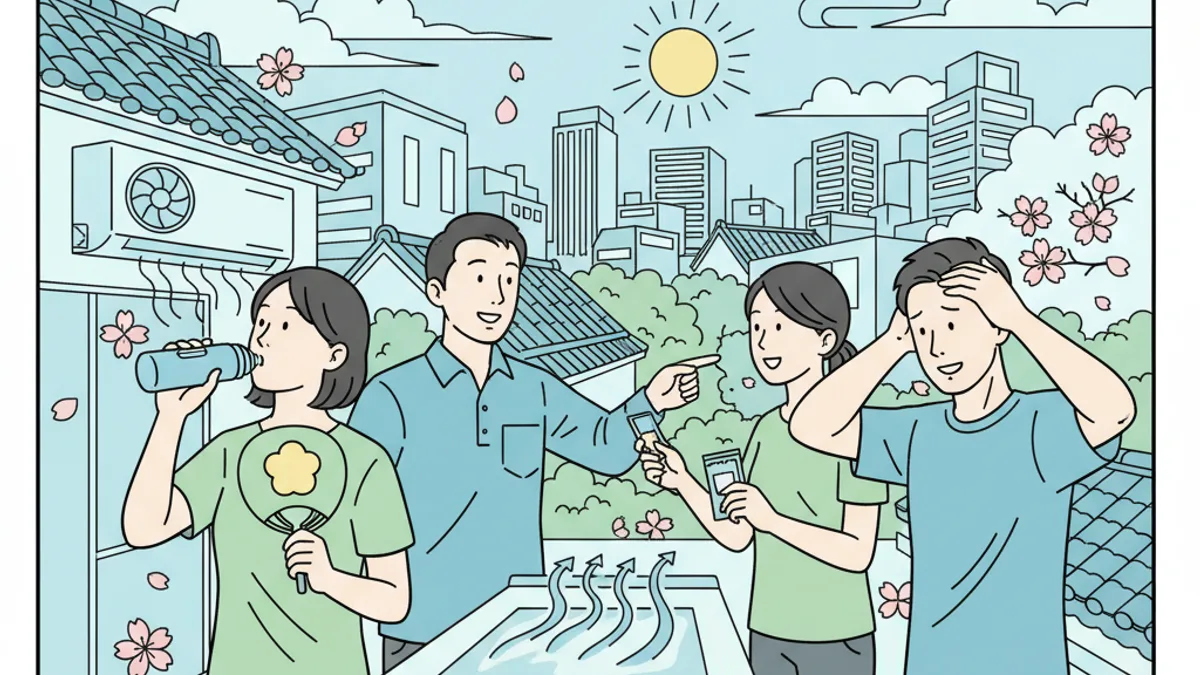
Japan Braces for Dangerous Heat Wave: Essential Prevention Tips for Expats
Japan faces dangerous heat wave with temperatures reaching 35°C in some regions. Medical experts warn against hesitating to use air conditioning, emphasizing regular hydration and heat stroke prevention.
AI-written summary of Japanese reports; not human-reviewed; check the linked sources. How we write articles
Key Points
- • Temperatures reaching 35°C in Kinki and Kyushu regions through May 18th.
- • Use air conditioning without hesitation; health risks outweigh electricity cost concerns.
- • Drink water frequently before feeling thirsty to prevent dehydration and heat stroke.
- • Recognize heat stroke symptoms: dizziness, nausea, confusion; call 119 if severe.
Japan is experiencing unseasonably high temperatures this week, with meteorological agencies warning residents to take serious precautions against heat stroke as mercury levels climb toward dangerous summer highs.
According to NHK, temperatures across the nation are expected to reach extreme levels, with some areas in the Kinki and Kyushu regions forecast to hit 35 degrees Celsius or higher—classified as "moshobi" or extremely hot days. On May 17th, Tokyo's city center recorded its first "manatsu-bi" (真夏日) or midsummer day of the year, exceeding 30 degrees Celsius. This pattern of intense heat is expected to continue, with temperatures across a broad area from Kyushu to Tohoku reaching similar levels.
The timing of this heat wave is particularly concerning. Yahoo Japan reports that temperatures on May 18th are expected to reach levels typically seen in early July, meaning residents are experiencing summer-like conditions nearly two months ahead of schedule. This unexpected timing catches many people unprepared, as they haven't yet adjusted their routines or living spaces for extreme heat.
For foreign residents in Japan, understanding heat stroke prevention is crucial. The condition, known locally as "necchusho" (熱中症), is taken very seriously by Japanese health authorities and can be life-threatening if not addressed promptly. The Japan Meteorological Agency and health officials are urging everyone to take preventive measures seriously.
One critical issue highlighted by medical professionals, as reported by Yahoo Japan, is the reluctance some people feel about using air conditioning. Doctors are issuing warnings specifically about this hesitation, which often stems from concerns about electricity costs or environmental impact. However, physicians emphasize that the health risks of heat stroke far outweigh these considerations, particularly during extreme heat events.
Experts recommend several key prevention strategies. First and foremost is regular hydration—drinking water frequently throughout the day, even before feeling thirsty. During hot weather, the body loses fluids rapidly through perspiration, and waiting until you feel thirsty means you're already experiencing early dehydration.
Air conditioning use is not a luxury during extreme heat but a necessary health measure. For those concerned about costs, setting the temperature to around 28 degrees Celsius provides adequate cooling while managing electricity consumption. If air conditioning isn't available, using fans, taking cool showers, and spending time in air-conditioned public spaces like shopping centers or libraries are viable alternatives.
Additional precautions include avoiding outdoor activities during peak heat hours (typically 10 AM to 4 PM), wearing lightweight and light-colored clothing, and using sun protection such as hats and parasols. When going outside, seek shade whenever possible and take frequent breaks in cool areas.
Expats should also familiarize themselves with heat stroke symptoms, which include dizziness, nausea, headache, rapid heartbeat, confusion, and cessation of sweating despite heat. If you or someone nearby shows these signs, immediately move to a cool location, remove excess clothing, apply cool water to the skin, and seek medical attention. In emergencies, call 119 for an ambulance.
Special attention should be given to vulnerable populations, including elderly individuals, young children, and those with chronic health conditions. If you're checking on neighbors or friends in these categories, ensure they have adequate cooling and are staying hydrated.
The current heat wave serves as an important reminder that Japan's summers can be intense and potentially dangerous. As climate patterns shift and extreme weather becomes more common, foreign residents should treat heat warnings with the same seriousness as other natural disaster alerts. Preparation and prevention are key to staying safe during these challenging conditions.
Sources
This article was written by AI from these Japanese-language reports. Check them before acting on anything here.
- [1] NHK — original report (Japanese)
- [2] NHK — original report (Japanese)
- [3] Yahoo! Japan News — original report (Japanese)
- [4] Yahoo! Japan News — original report (Japanese)