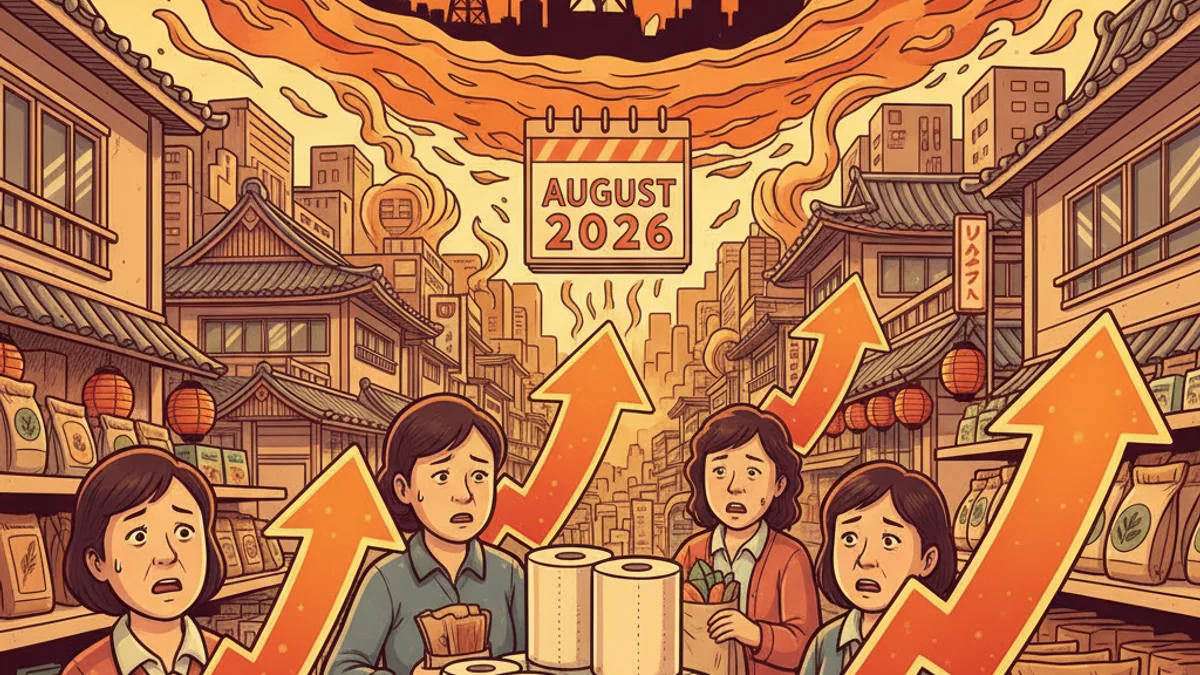
Middle East Crisis Triggers Price Hikes for Household Essentials in Japan
Middle East tensions are driving August 2026 price increases for paper products, diapers, and fertilizer in Japan. Major manufacturers cite rising raw material costs from regional instability.
Key Points
- • Daio Paper raising all household and commercial product prices from August 2026.
- • Fertilizer costs increasing 5% for autumn farming due to urea price surge.
- • Paper diapers and household paper products affected by Middle East supply disruptions.
- • Consider purchasing essential items before August price hikes take effect.
Foreign residents in Japan should prepare for higher costs on everyday household items as escalating tensions in the Middle East drive up prices for diapers, paper products, and fertilizer. Multiple Japanese manufacturers have announced significant price increases taking effect this summer, with the impact expected to ripple through grocery stores and pharmacies nationwide.
According to NHK, major paper manufacturer Daio Paper announced it will raise prices on all household and commercial products starting in August 2026. The company cited the intensifying Middle East crisis as the primary factor behind increased costs for raw materials and supplies. This follows a broader pattern of geopolitical instability affecting global supply chains and commodity prices.
The price increases extend beyond paper products. JA Zenno, Japan's National Federation of Agricultural Cooperative Associations, announced a 5% price hike for fertilizer intended for autumn farming operations, as reported by NHK. The organization pointed to soaring international prices for urea, a key fertilizer ingredient, driven by the Iranian situation. This increase will likely affect agricultural costs throughout Japan's farming sector.
While specific details about diaper price increases were limited in available reports, Yahoo Japan Business confirmed that paper diaper manufacturers are implementing price hikes due to Middle East-related disruptions. Given that Daio Paper produces household paper products including diapers, families with young children should anticipate higher costs when purchasing these essential items starting in August.
The Middle East crisis is creating a domino effect on Japan's consumer economy. The region plays a crucial role in global energy markets and various raw material supply chains. Disruptions there translate into higher shipping costs, increased prices for petroleum-based products, and general supply chain uncertainty. For a resource-dependent nation like Japan, which imports the vast majority of its raw materials, such geopolitical instability quickly impacts domestic prices.
Expats living in Japan should note that these increases come amid broader inflationary pressures. Yahoo Japan Business also reported that Takano Foods will raise prices on its popular "Okame Natto" fermented soybean products by 15%, though this appears related to separate cost factors. The combination of multiple price increases across different product categories suggests that household budgets may face mounting pressure in the coming months.
For foreign residents, particularly those with families, these developments have practical implications. Parents should consider stocking up on diapers before August if storage space permits, though bulk buying should be balanced against the risk of over-purchasing. Those who regularly purchase paper products like toilet paper, tissues, and paper towels may want to review their household budgets and adjust accordingly.
The fertilizer price increase, while primarily affecting farmers, could eventually influence food prices as agricultural production costs rise. Japan's agricultural sector already faces challenges from an aging farming population and limited arable land. Additional cost pressures from expensive fertilizer may contribute to higher prices for domestically grown produce in subsequent seasons.
These price increases underscore the interconnected nature of global markets and how distant geopolitical events can directly impact daily life in Japan. The Middle East situation remains fluid, and further developments could trigger additional price adjustments across various sectors.
Expats should monitor announcements from major retailers and manufacturers in the coming weeks. Many Japanese stores provide advance notice of price changes through in-store signage and websites. Staying informed about these changes can help foreign residents make strategic purchasing decisions and better manage household expenses during this period of economic uncertainty driven by international events beyond Japan's borders.