Japan Introduces Numerical Standards for Dangerous Driving Prosecutions
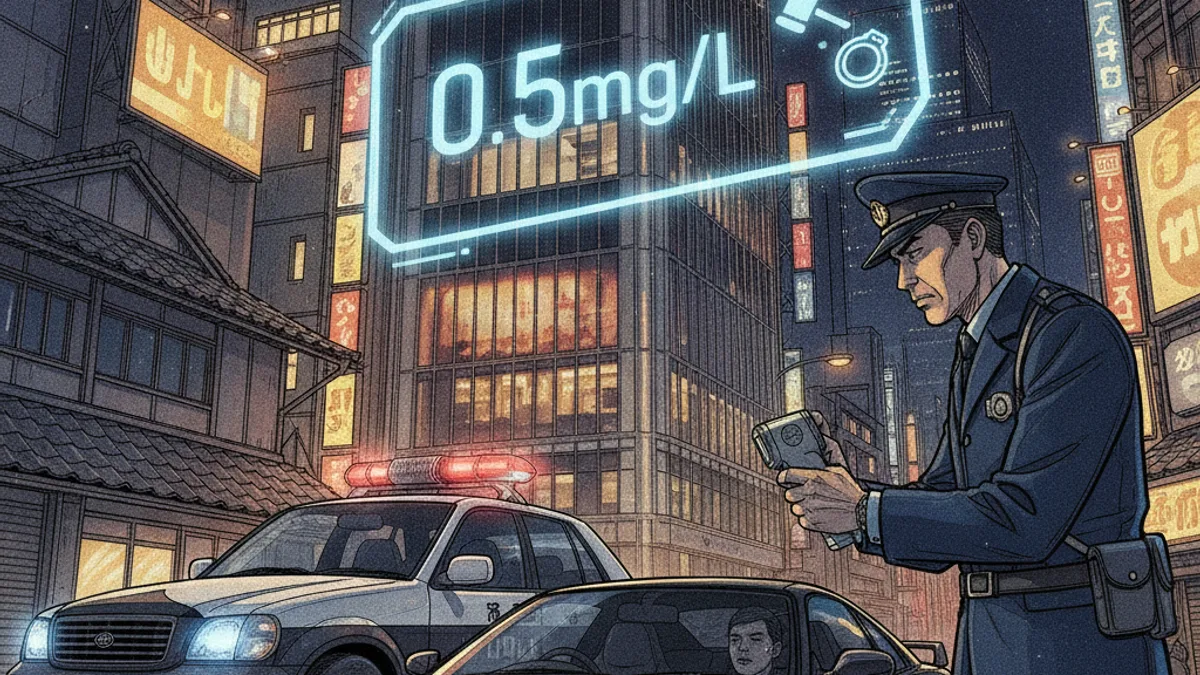
Japan enacted new dangerous driving law with numerical standards including 0.5mg/L breath alcohol threshold. The reform takes effect July 2026, establishing clear criteria for criminal prosecution.
Key Points
- • Breath alcohol threshold of 0.5 milligrams per liter triggers dangerous driving charges.
- • New law takes effect July 2026 with clear numerical prosecution standards.
- • Dangerous driving convictions carry up to 20 years imprisonment for deaths.
- • Criminal convictions can affect visa status and residency permits for foreigners.
Japan has enacted landmark legislation establishing clear numerical thresholds for prosecuting dangerous driving cases, marking a significant shift in how traffic offenses are handled under criminal law. The revised Act on Punishment of Acts Causing Death or Injury by Driving a Motor Vehicle was passed on June 25, 2026, and is expected to take effect as early as July 2026, according to NHK.
The new law introduces specific measurable criteria for determining when dangerous driving resulting in death or injury (kiken unten chishi shōzai) charges apply. Most notably, the legislation establishes a blood alcohol threshold of 0.5 milligrams per liter of breath for drunk driving cases. This numerical standard aims to eliminate ambiguity in prosecutions and ensure consistent application of the law across Japan.
For foreign residents in Japan, this reform represents an important development in traffic law enforcement. Previously, dangerous driving prosecutions often relied on more subjective assessments of driver behavior and impairment levels. The introduction of concrete numerical standards means that both prosecutors and drivers now have clearer guidelines about what constitutes criminal dangerous driving versus lesser traffic violations.
The dangerous driving causing death or injury charge carries severe penalties under Japanese law, including imprisonment of up to 20 years when someone is killed, and up to 15 years when injuries occur. These penalties are significantly harsher than standard traffic violations, making the threshold for prosecution a critical legal distinction. By establishing clear numerical criteria, lawmakers aim to ensure that the most serious cases are appropriately prosecuted while maintaining legal clarity and fairness.
According to NHK, the reform also addresses high-speed driving cases, though specific speed thresholds were included in the legislation alongside the alcohol standards. This suggests that authorities will now have objective measures for determining when excessive speed constitutes dangerous driving under criminal law, rather than simply a traffic infraction.
For expats driving in Japan, the practical implications are clear: understanding these thresholds is essential for avoiding serious criminal charges. Japan already maintains a strict zero-tolerance approach to drinking and driving for administrative purposes, with licenses suspended for any detectable alcohol. However, this new 0.5 mg/L breath alcohol standard specifically defines when criminal dangerous driving charges apply, representing a higher threshold that triggers the most severe legal consequences.
The timing of the law's implementation—potentially as soon as July 2026—means drivers should familiarize themselves with these standards immediately. Foreign residents should note that Japan's legal system does not differentiate between citizens and non-citizens in traffic law enforcement, and criminal convictions can have serious implications for visa status and residency permits.
Legal experts suggest that the numerical standards will likely reduce courtroom disputes over whether dangerous driving occurred, as prosecutors can now point to objective measurements rather than subjective interpretations of driver behavior. This could lead to more consistent sentencing and fewer lengthy legal battles over the classification of traffic incidents.
The reform reflects broader efforts by Japanese lawmakers to strengthen traffic safety enforcement and provide clearer legal frameworks. Japan has historically maintained strict traffic laws, and this legislation continues that tradition while modernizing the approach to dangerous driving prosecutions.
For foreign residents, the key message is straightforward: never drive after consuming any alcohol, maintain safe speeds at all times, and understand that numerical thresholds now exist that can trigger serious criminal charges. The implementation of these standards underscores Japan's commitment to road safety and its willingness to impose severe penalties on dangerous drivers.
As the law takes effect in the coming weeks, drivers should stay informed about any additional guidance issued by authorities regarding the specific numerical standards and their application in various driving scenarios.