Japan Releases Medical Glove Stockpile Amid Middle East Supply Crisis
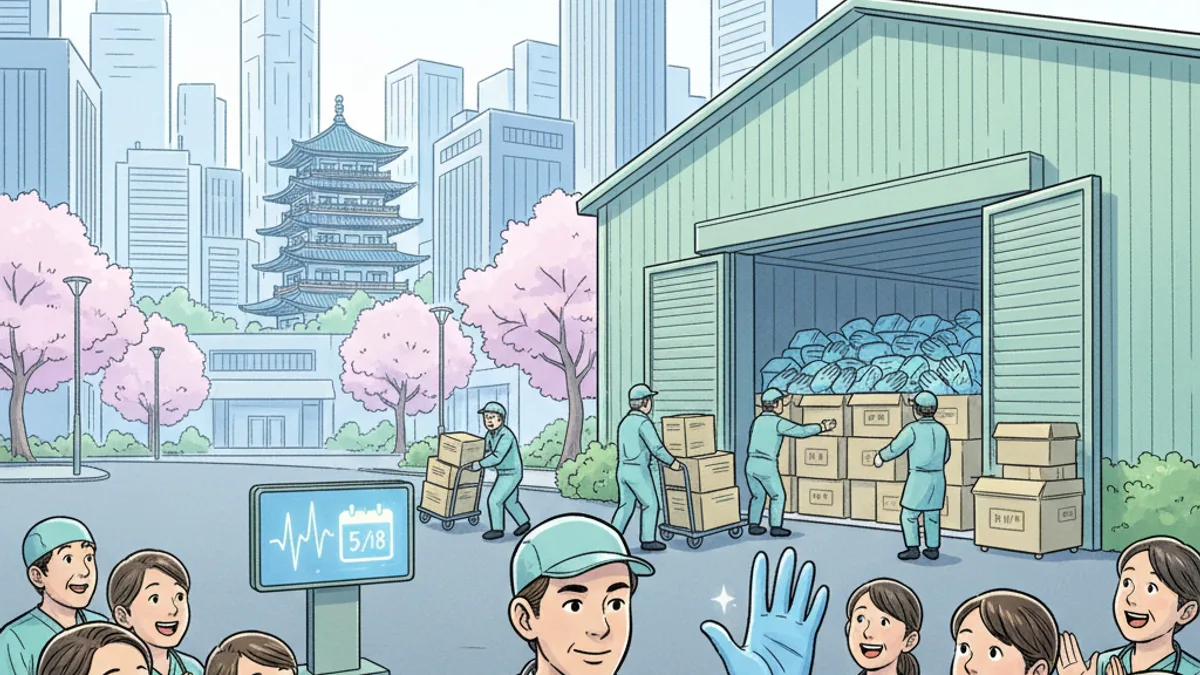
Japan's government is releasing medical glove stockpiles at 5,980 yen per unit starting May 18 due to Middle East supply disruptions. Healthcare facilities facing shortages can apply for emergency supplies.
Key Points
- • Government accepts medical glove purchase applications starting May 18, 2026.
- • Stockpiled gloves priced at 5,980 yen per unit for eligible facilities.
- • Only medical institutions proving procurement difficulties can apply for supplies.
- • Deliveries begin late May to address Middle East supply disruptions.
The Japanese government is releasing emergency medical glove stockpiles to healthcare facilities facing supply shortages due to disruptions in the Middle East, the Ministry of Health, Labour and Welfare announced this week. Applications for the stockpiled gloves will be accepted starting May 18, 2026, with deliveries beginning in late May.
According to NHK, the decision to release government reserves comes as tensions in the Middle East have disrupted global supply chains for medical equipment, making it increasingly difficult for Japanese hospitals and clinics to secure adequate supplies of disposable medical gloves. These gloves are essential for infection control and routine medical procedures across all healthcare settings.
The Ministry of Health, Labour and Welfare has set the price for the stockpiled gloves at 5,980 yen per unit, as reported by Livedoor News. While the specific quantity per unit has not been disclosed in official announcements, the pricing structure aims to make the emergency supply accessible to facilities experiencing procurement difficulties.
Eligibility for the program is restricted to medical institutions that can demonstrate difficulty in securing gloves through normal supply channels. This targeted approach ensures that the limited government stockpile reaches facilities with the most urgent needs. Healthcare providers will need to submit formal purchase applications through the ministry's designated channels beginning May 18.
For foreign residents in Japan, this development highlights the broader impact of international conflicts on everyday healthcare services. While the glove shortage primarily affects medical facilities rather than individual patients directly, supply disruptions could potentially influence the availability of certain medical services or procedures, particularly elective treatments that require significant quantities of disposable protective equipment.
The situation also underscores Japan's vulnerability to global supply chain disruptions, as the country imports substantial quantities of medical supplies and equipment. Medical gloves, typically manufactured in Southeast Asian countries like Malaysia and Thailand, have become harder to source as geopolitical tensions affect shipping routes and manufacturing operations in the Middle East region.
Healthcare facilities across Japan have been grappling with rising costs and supply uncertainties for various medical materials over the past several years. The COVID-19 pandemic initially exposed weaknesses in global supply chains for personal protective equipment, and subsequent international disruptions have continued to challenge procurement strategies for hospitals and clinics.
The government's decision to tap into strategic reserves demonstrates the seriousness of the current shortage. Japan maintains stockpiles of critical medical supplies for emergency situations, and releasing these reserves indicates that normal market mechanisms are insufficient to address the current supply gap.
For expats working in or utilizing Japan's healthcare system, the glove shortage serves as a reminder of the interconnected nature of global supply chains and their potential impact on local medical services. However, patients should not expect significant disruptions to routine care, as the government's intervention aims to prevent any deterioration in healthcare quality or safety standards.
Medical professionals and administrators at healthcare facilities experiencing supply difficulties should prepare their applications ahead of the May 18 opening date. The ministry is expected to process requests on a priority basis, with facilities demonstrating the most critical needs likely to receive allocations first.
As the situation develops, the government may announce additional measures to stabilize medical supply chains and reduce dependence on imports from geopolitically sensitive regions. Healthcare facilities are also likely exploring alternative suppliers and considering longer-term procurement strategies to avoid future shortages.
The medical glove situation reflects broader challenges facing Japan's healthcare system as it navigates an increasingly complex international environment while maintaining high standards of medical care for all residents, including the growing foreign population.