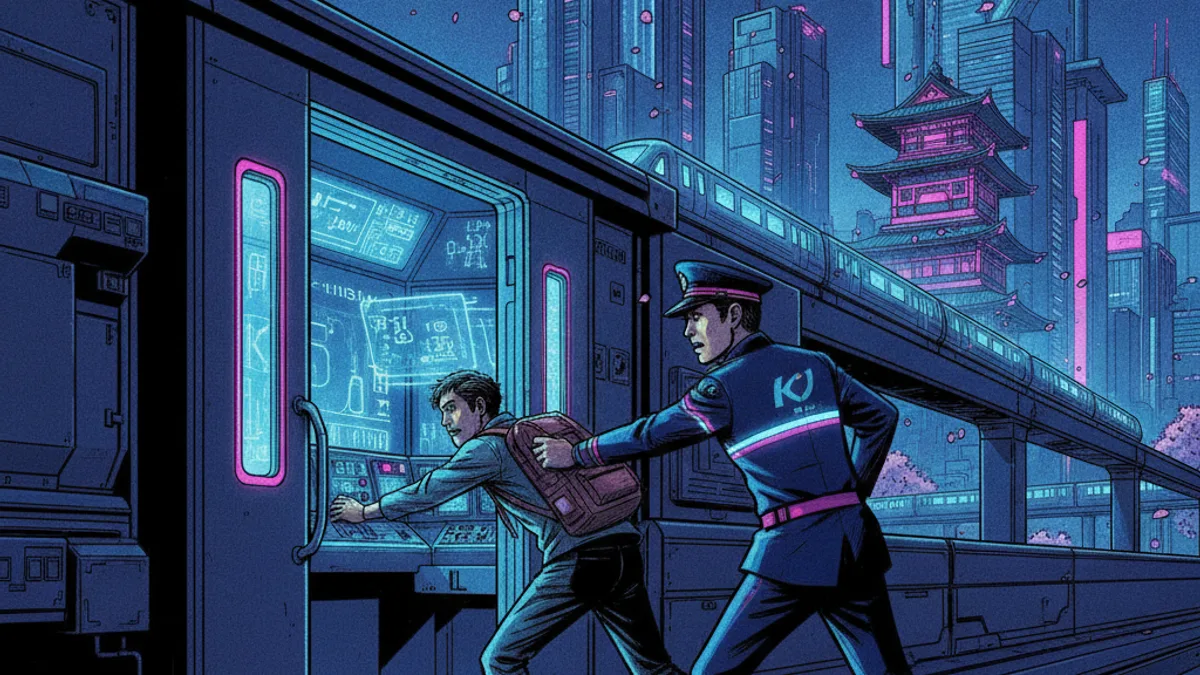
Kintetsu Railway Incident Raises Safety Concerns for Foreign Passengers
A Chinese passenger's unauthorized entry into a Kintetsu train control room after mistaken boarding sparked safety concerns. The incident highlights the importance of respecting restricted railway areas and proper procedures.
Key Points
- • Never enter train crew or control areas; immediately notify staff if boarding wrong train.
- • Kintetsu confirmed no operational impact but called the unauthorized access dangerous behavior.
- • Railway restricted zones are clearly marked and off-limits under all circumstances in Japan.
- • Mistaken boarding should be reported to conductors who can assist without extra charges.
A recent incident involving a Chinese passenger who entered a restricted train control area on Kintetsu Railway has sparked widespread concern about transportation safety protocols in Japan, particularly for foreign travelers unfamiliar with the country's railway systems.
According to reports from Yahoo Japan and Livedoor News published on June 29, 2026, a Chinese passenger who mistakenly boarded a Kintetsu limited express train gained access to the crew control room and touched various control equipment. The passenger subsequently posted a video on social media showing themselves handling instrument levers while waiting in the restricted area, which quickly drew sharp criticism from Japanese netizens and raised serious questions about railway security measures.
Kintetsu Railway officials responded to the incident by stating that while there was no direct impact on train operations, they acknowledged the behavior as dangerous and expressed regret over the situation. The company's statement emphasized the severity of unauthorized access to control areas, even when no immediate operational disruptions occur.
For foreign residents and travelers in Japan, this incident highlights several important aspects of railway safety and etiquette. Japanese railway systems maintain strict protocols regarding restricted areas, and unauthorized entry into crew compartments or control rooms is considered a serious breach of safety regulations. These areas contain sensitive equipment that, if mishandled, could potentially compromise passenger safety or disrupt service.
The incident appears to have originated from a boarding error, a situation that many foreign passengers in Japan may encounter due to language barriers or unfamiliarity with the complex railway network. Japan's extensive rail system includes various train types—local, rapid, express, and limited express—each with different stopping patterns and fare structures. Mistakenly boarding a limited express train without the proper ticket is a common error, but the appropriate response is to immediately notify station staff or train crew rather than entering restricted areas.
This case also underscores the importance of understanding Japanese railway etiquette and regulations. Train crew areas are clearly marked with signs, typically in Japanese and increasingly in English and Chinese at major stations and on newer trains. These restricted zones are off-limits to passengers under all circumstances, and violating these boundaries can result in legal consequences beyond social media backlash.
The incident coincides with other recent railway safety concerns on the Kintetsu line. Yahoo Japan also reported on June 29, 2026, about a separate derailment incident where a train car was left in a bent position, prompting an apology from Kintetsu Railway. While unrelated to the control room incident, this suggests a period of heightened scrutiny on the railway operator's safety measures and protocols.
For expats living in Japan, the key lessons from this incident are clear. First, if you board the wrong train, immediately inform the conductor or station staff at the next stop—they are trained to handle such situations and can guide you to your correct destination, often without additional charges if the error was genuine. Second, respect all restricted areas on trains and in stations; these boundaries exist for critical safety reasons. Third, be aware that actions considered minor infractions in other countries may be viewed much more seriously in Japan, where public transportation safety is paramount.
The widespread criticism this video received also reflects Japanese society's strong emphasis on collective responsibility and public safety. What might seem like a harmless mistake or curiosity in one cultural context can be perceived as deeply irresponsible behavior in Japan's safety-conscious railway culture.
As Japan continues to welcome increasing numbers of international visitors and residents, incidents like these serve as important reminders for railway operators to enhance multilingual signage and safety communications, while also highlighting the responsibility of foreign passengers to familiarize themselves with local transportation rules and protocols.
Sources
This article was written by AI from these Japanese-language reports. Check them before acting on anything here.
- [1] Yahoo! Japan News — original report (Japanese)
- [2] Livedoor News — original report (Japanese)
- [3] Yahoo! Japan News — original report (Japanese)
AI-written summary of Japanese reports; not human-reviewed; check the linked sources. How we write articles