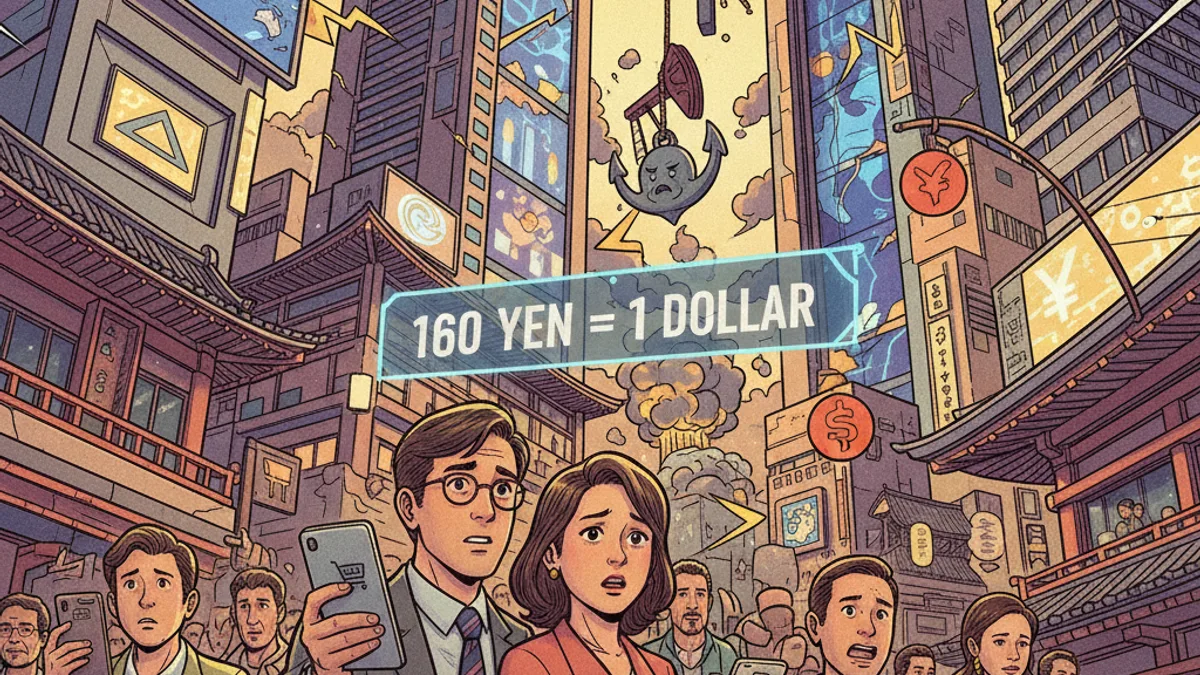
Yen Weakens to 160 Per Dollar as Middle East Tensions Drive Flight to Safety
The yen weakened to 160 per dollar on April 29 amid U.S.-Iran tensions, its lowest level in three weeks. The decline reduces purchasing power for expats making international transactions.
Key Points
- • Yen hit 160 per dollar April 29, first time since April 7.
- • Middle East tensions triggered safe-haven dollar buying against yen.
- • Weaker yen reduces value of international transfers and overseas purchases.
- • Foreign currency income converts to more yen at current rates.
The Japanese yen weakened to the 160-per-dollar level on April 29, 2026, marking its lowest point in approximately three weeks as escalating tensions between the United States and Iran triggered a flight to safe-haven currencies in global markets.
According to NHK, the yen fell to the 160-per-dollar range during trading on the New York foreign exchange market on Tuesday, representing the first time the currency has reached this level since April 7. The movement was driven by investors selling yen and buying dollars amid growing geopolitical uncertainty in the Middle East.
Yahoo Japan Business reported that the decline reflects the classic "risk-off" market phenomenon known as "有事のドル買い" (yuji no doru kai), or "buying dollars during emergencies." When international tensions rise, investors traditionally move their assets into U.S. dollars, which are perceived as a more stable store of value during periods of global instability.
The weakening yen comes at a particularly sensitive time for foreign residents in Japan, as it directly impacts purchasing power for international transactions, remittances, and overseas travel. For expats earning salaries in yen, this depreciation means reduced value when converting to other currencies or making purchases denominated in dollars or euros.
The current exchange rate represents a significant shift from earlier in April, when the yen had strengthened following intervention speculation and actual market intervention by Japanese monetary authorities. The return to 160-per-dollar levels suggests that geopolitical factors are currently outweighing domestic monetary policy considerations in determining the currency's value.
For foreign residents planning to send money home or make international purchases, the timing of these transactions becomes increasingly important. A weaker yen means that each dollar, euro, or pound requires more yen to purchase, effectively reducing the real value of yen-denominated savings and income when converted to foreign currencies.
The tensions between the United States and Iran that triggered this latest currency movement represent an ongoing source of volatility in global markets. While the specific details of the current dispute were not elaborated in the source materials, the market reaction demonstrates how quickly currency values can shift in response to international events.
Expats working for international companies or receiving income from overseas may actually benefit from the weak yen, as foreign currency transfers into Japan will yield more yen. However, those earning exclusively in yen and maintaining financial obligations abroad face increased costs.
The Japanese government and Bank of Japan have previously intervened in currency markets when the yen weakened beyond certain thresholds, though no immediate intervention has been announced in response to this latest movement. The authorities typically remain cautious about revealing specific intervention triggers to avoid giving traders predictable patterns to exploit.
For practical planning purposes, foreign residents should consider the following strategies: monitoring exchange rates closely if large transfers are planned, considering the use of forward contracts or currency hedging tools for significant future transactions, and being aware that import prices for foreign goods may increase as retailers adjust to the weaker yen.
The volatility also serves as a reminder of the importance of diversified savings strategies for expats living in Japan. Maintaining some assets in home currencies or international investment vehicles can provide a hedge against yen depreciation, though such decisions should be made in consultation with qualified financial advisors familiar with cross-border tax implications.
As geopolitical tensions continue to evolve, further currency fluctuations remain possible. Foreign residents should stay informed about both international developments and potential Japanese government responses that could affect exchange rates in the coming weeks.