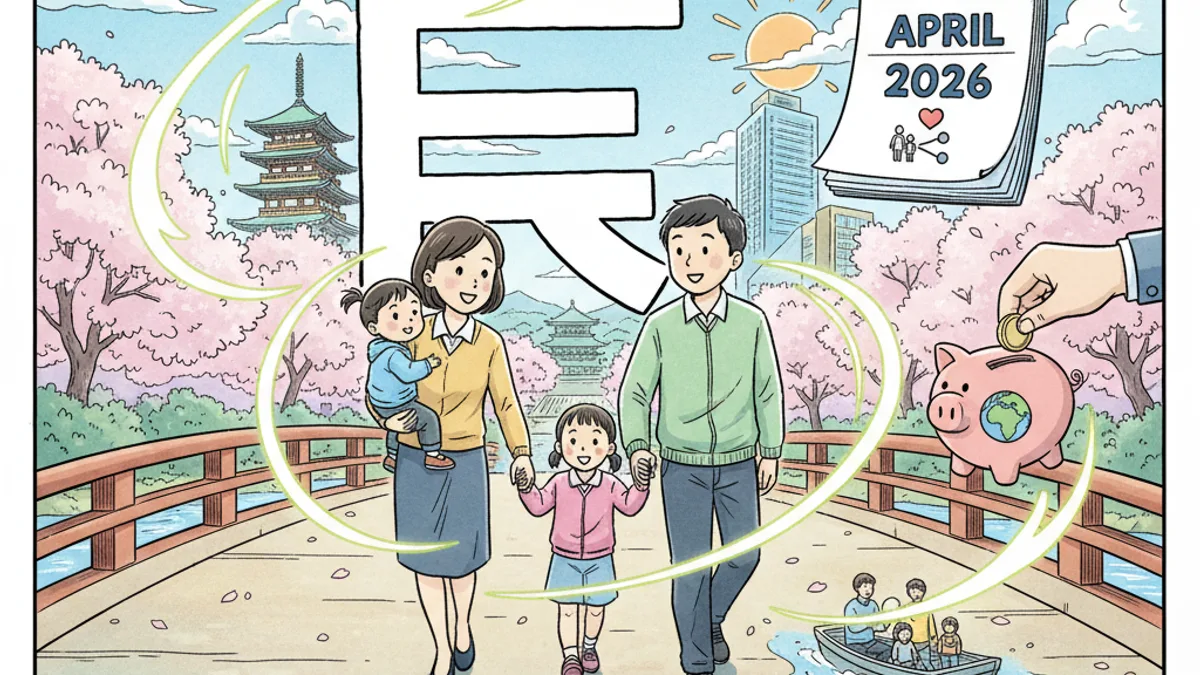
Japan Launches Child Support Fund and Shared Custody Options in April 2026
Japan introduces a 250-yen monthly child support fund via health insurance and allows shared custody for divorced parents starting April 2026, affecting all residents including expats.
Key Points
- • Child support fund adds approximately 250 yen monthly to health insurance premiums.
- • Shared custody now optional for divorces finalized from April 1, 2026 onward.
- • All health insurance subscribers pay the fund regardless of parental status.
- • Expat families divorcing in Japan can now pursue shared custody arrangements.
Japan has implemented two significant family policy changes as of April 2026, introducing a new child and family support fund collected through health insurance premiums and allowing divorced parents to choose shared custody arrangements for the first time in the country's history.
According to NHK, the "Child and Family Support Fund" (Kodomo Kosodate Shikin) collection began on April 1, 2026, with contributions added to public health insurance premiums. The average monthly contribution is approximately 250 yen per person for the current fiscal year. This new revenue stream is specifically designated to strengthen child-rearing support measures as part of Japan's broader strategy to address its declining birth rate.
For foreign residents enrolled in Japan's public health insurance system—which includes most visa holders living in the country for more than three months—this means a modest increase in monthly insurance costs. The fund applies universally to all health insurance subscribers, regardless of whether they have children. The government has emphasized that all collected funds will be allocated entirely to enhanced childcare support programs, though specific details about which programs will receive funding have not been fully disclosed.
The second major policy shift allows divorced parents to choose "shared custody" (kyodo shinken) alongside the traditional "sole custody" (tandoku shinken) system, as reported by NHK. Previously, Japanese law required that only one parent retain parental rights after divorce, a system that had faced increasing criticism both domestically and internationally. The new framework, effective April 1, 2026, permits both parents to maintain legal parental authority over their children following divorce.
According to Yahoo Japan Domestic coverage, this represents a fundamental change in how post-divorce parenting arrangements function in Japan. Under the previous sole custody system, the non-custodial parent often faced significant barriers to maintaining involvement in their child's life, including decisions about education, medical care, and other important matters. The shared custody option aims to ensure both parents can remain actively involved in raising their children after separation.
For expat families in Japan, this policy change carries particular significance. Foreign residents who divorce in Japan—whether from Japanese nationals or other foreign residents—now have the legal option to pursue shared custody arrangements. However, it's important to note that shared custody is optional rather than mandatory; parents can still choose sole custody if they mutually agree or if a family court determines it serves the child's best interests.
The implementation details suggest that existing custody arrangements are not automatically affected. The new shared custody provisions apply to divorces processed from April 1, 2026, onward. Parents who divorced under the previous sole custody system would need to pursue separate legal proceedings to modify their arrangements, though the process for doing so remains under development.
Legal experts anticipate that family courts will play a crucial role in determining custody arrangements when parents cannot reach agreement. Factors likely to influence court decisions include each parent's ability to cooperate, the child's preferences (depending on age), and the practical logistics of shared parenting arrangements.
For foreign residents considering divorce or already navigating custody issues, consulting with a family law attorney familiar with both the new shared custody provisions and international custody considerations is strongly advisable. Cross-border custody situations may involve additional complexities, particularly regarding enforcement of custody agreements if one parent relocates outside Japan.
These policy changes reflect Japan's evolving approach to family support and child welfare. The support fund aims to address demographic challenges through enhanced services, while the shared custody option acknowledges diverse family structures and the importance of maintaining parent-child relationships after divorce. Foreign residents should stay informed about implementation details as government agencies and courts develop operational frameworks for these new policies.